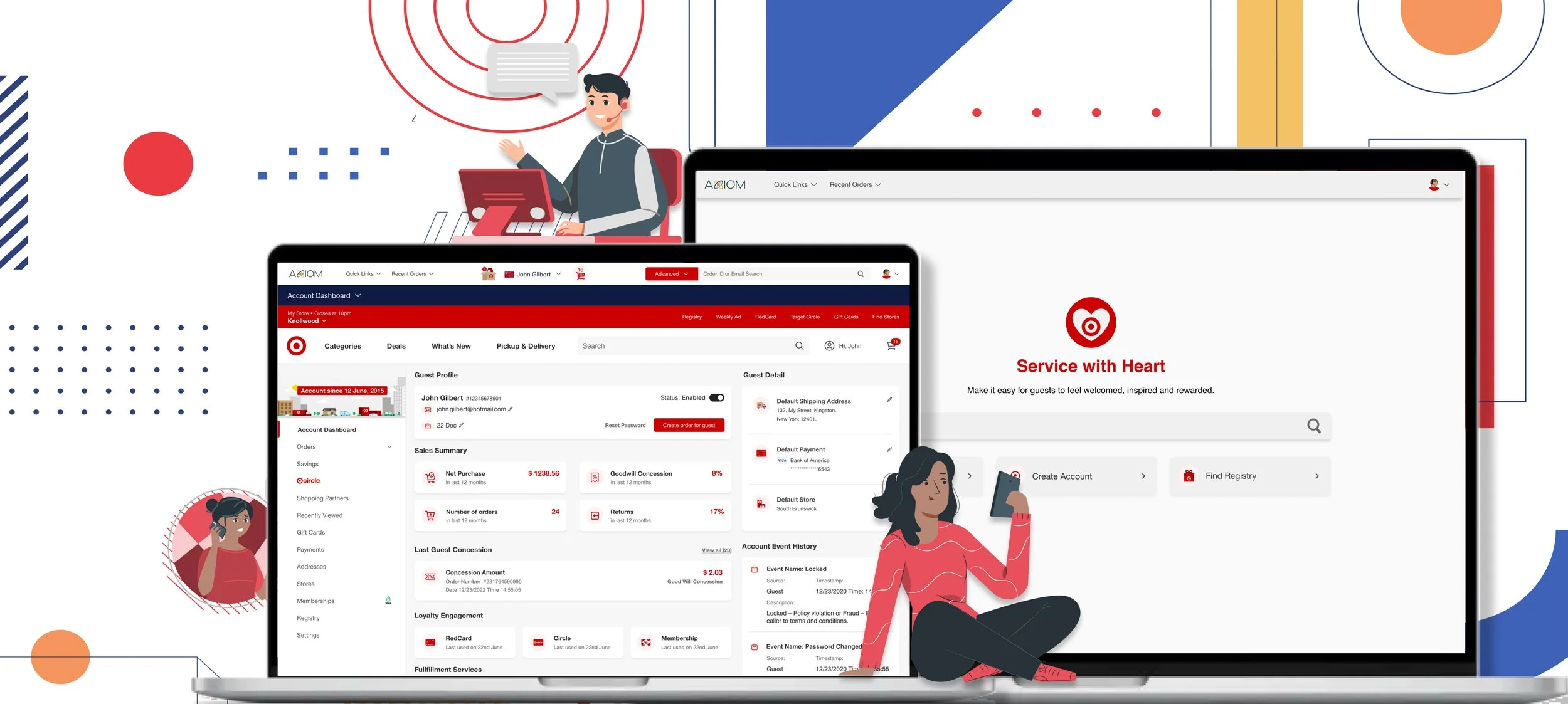
Legacy Vs Contemporary
This project epitomizes strategic design thinking, wherein the relentless pursuit of aesthetic excellence not only ignites innovation but also stands as the pinnacle of our aspirations.
Nov 2023- Jan 2024
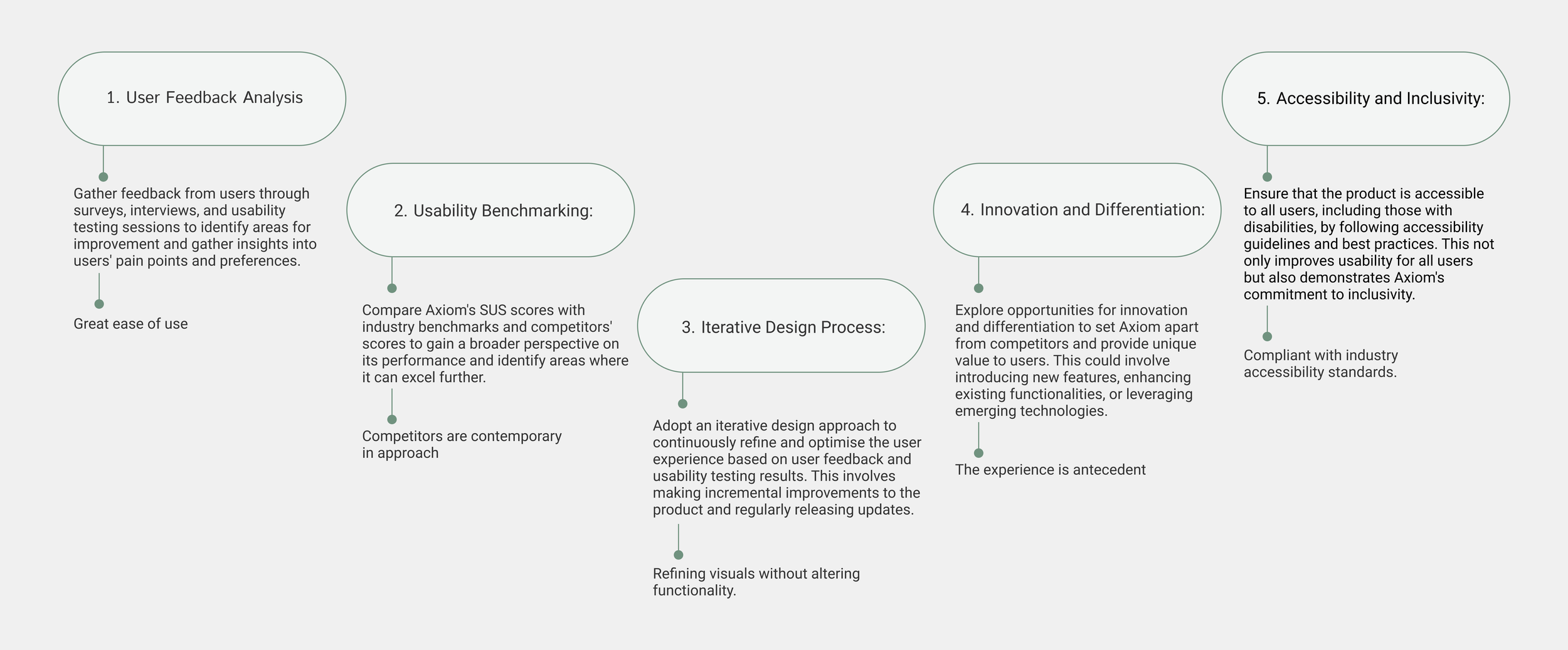
While high SUS scores indicate that users find the product highly usable and intuitive, there are still opportunities for refinement and innovation.
The achievement of consistently high System Usability Scale (SUS) scores over the past four years, culminating in a remarkable score of 88 in Q3 of 2023, is undoubtedly a commendable feat for Axiom. However, such outstanding performance prompts a critical question: what further improvements or enhancements can be made to a product that already boasts exceptional usability?
Even a product with excellent usability can benefit from continuous evaluation and enhancement to maintain its competitive edge and address evolving user needs and expectations.
Insights
By proactively refining and innovating visual elements and interfaces, Axiom can capitalize on its achievement of high SUS scores, amplifying usability and user experience. This strategy ensures sustained satisfaction and loyalty within its user base.
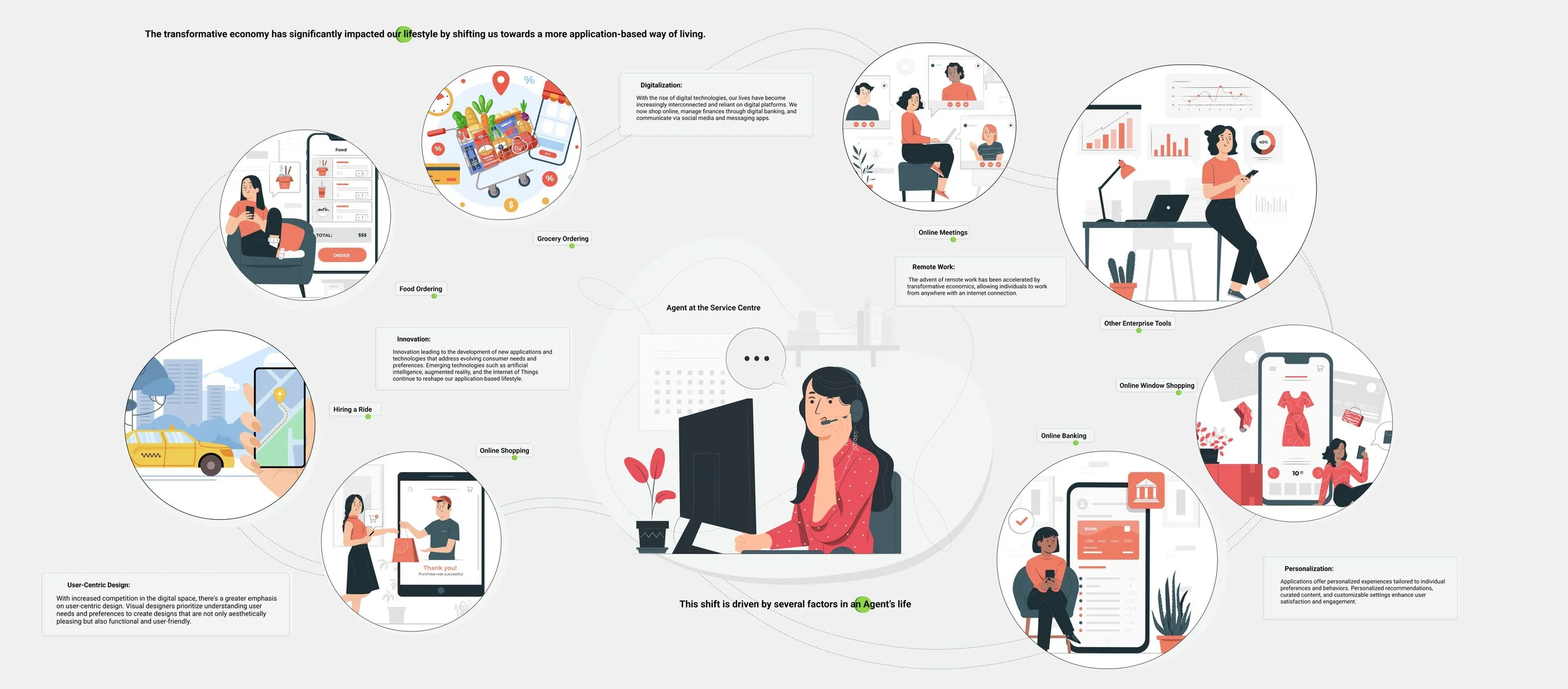
What prompted this sudden shift in user perception of Axiom?
The paradigm shift in user perception towards Axiom stems from the transformative influence of economics on our lifestyle. This transition to an application-centric lifestyle is fueled by the pillars of convenience, connectivity, personalization, mobility, and innovation. Agents now seamlessly integrate multiple applications into both their professional and personal spheres, heightening their cognitive standards for usability and aesthetic appeal. Consequently, users unconsciously benchmark these attributes against each interaction, shaping their overall perception of Axiom's user experience.
How to craft a contemporary visual guide that reflects current design trends and creates a cohesive and engaging user experience for Axiom?
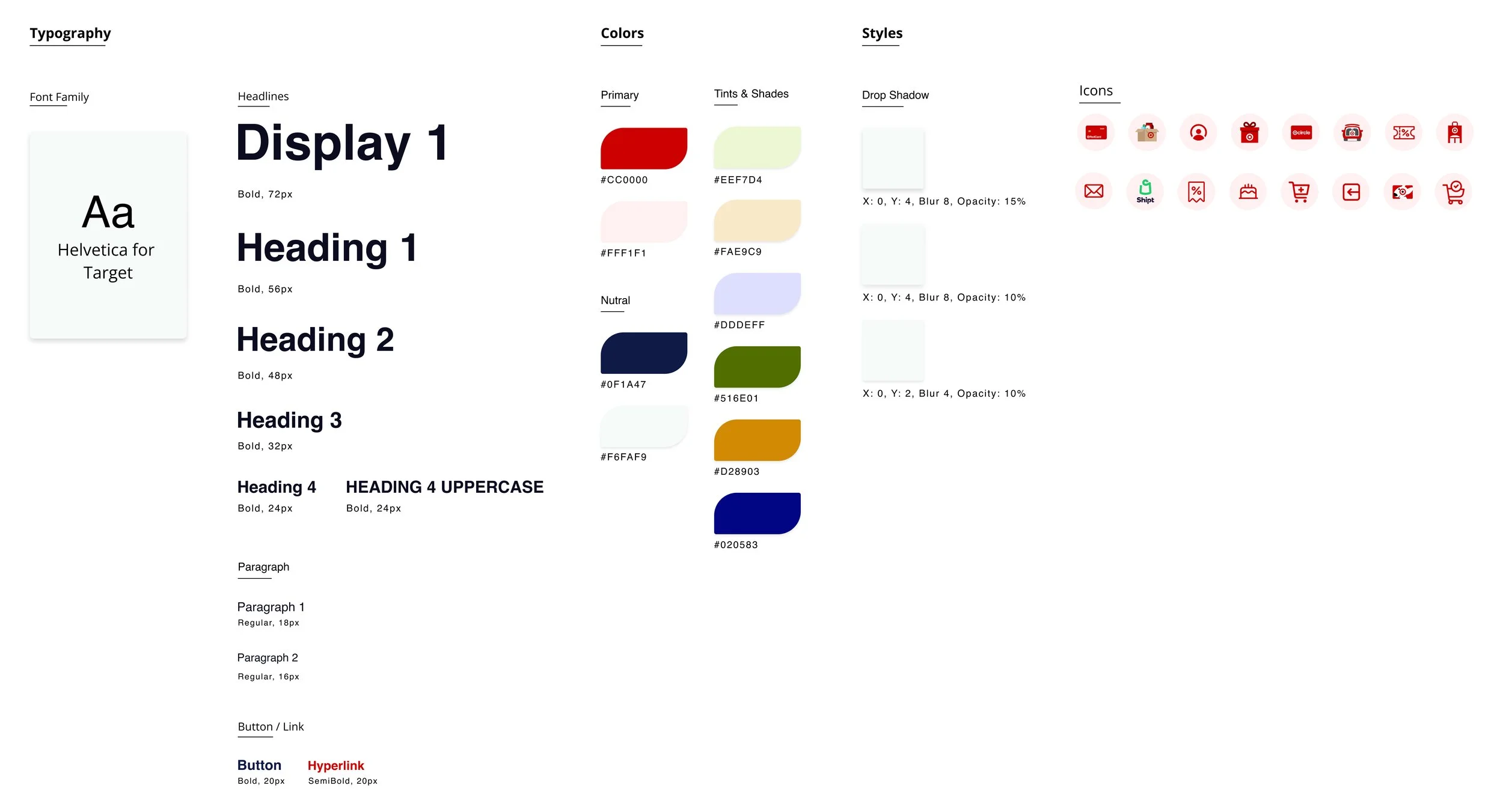
A contemporary visual guide for enterprise applications encompasses a set of design principles, styles, and guidelines tailored specifically for use in business and organizational software interfaces. It focuses on creating visually appealing, intuitive, and consistent user experiences that align with modern design trends while meeting the functional needs of enterprise users.
Clean and Minimalist Design: Focus on simplicity, whitespace, and decluttered layouts to enhance readability and user focus.
Consistent Branding: Maintain visual consistency with brand guidelines, including colours, typography, logos, and imagery.
Responsive Design: Ensure interfaces adapt seamlessly to different devices and screen sizes for consistent usability.
Intuitive Navigation: Implement clear menus, breadcrumbs, and navigation bars to help users navigate complex applications effortlessly.
Accessibility Considerations: Incorporate features to ensure usability for all users, including those with disabilities, following accessibility standards.
Data Visualization: Present complex data in visually appealing and understandable formats such as charts, graphs, and dashboards.
User Feedback and Iteration: Integrate mechanisms for gathering feedback and conducting iterative design cycles to refine and improve user experience continuously.
Design Style
Crafted an innovative design guide, leveraging contemporary trends and emerging patterns, with the Nicolete design system as the cornerstone.
UI Evolution: Enhancing User Experience
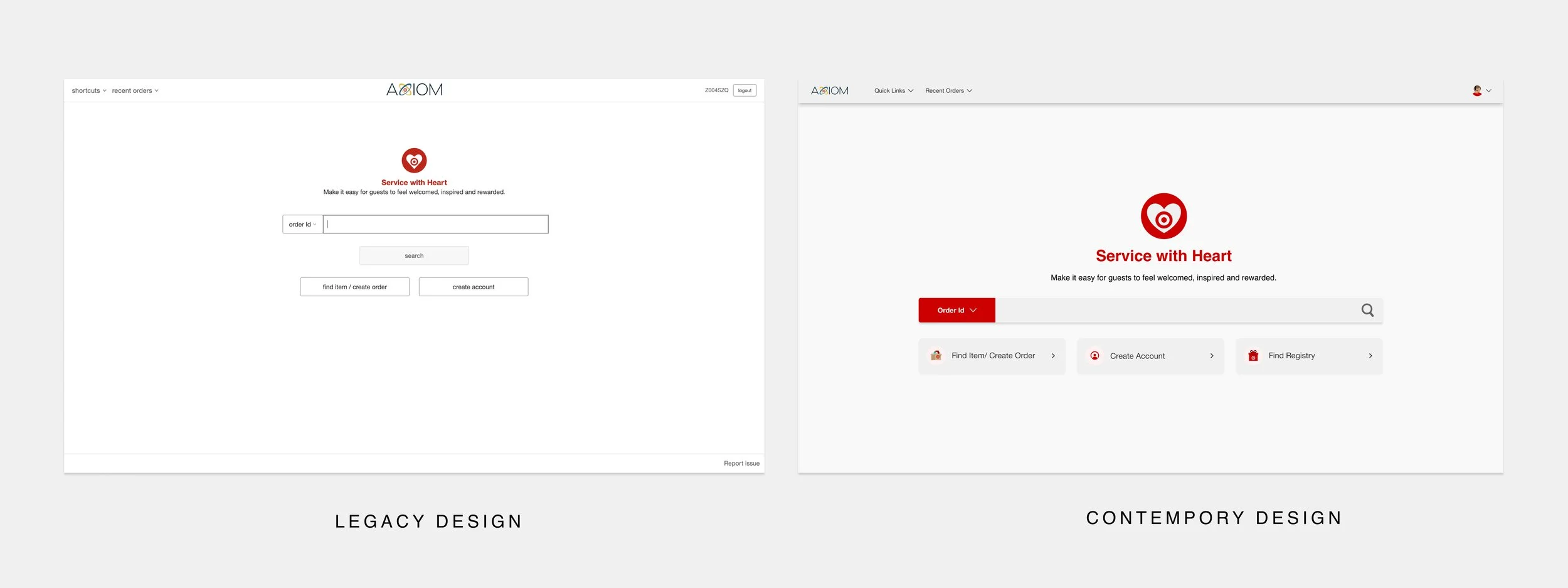
Axiom Landing page
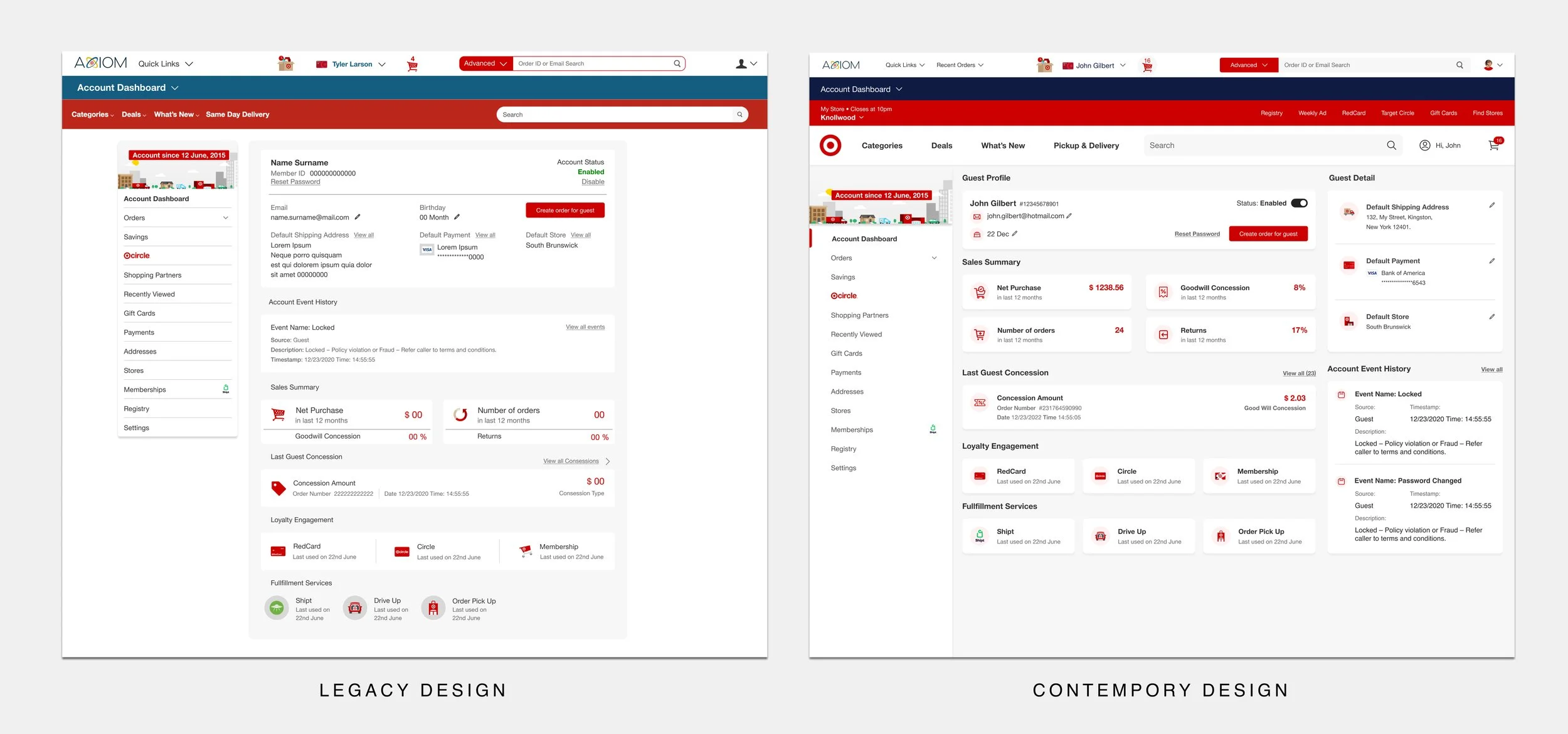
Account Dashboard
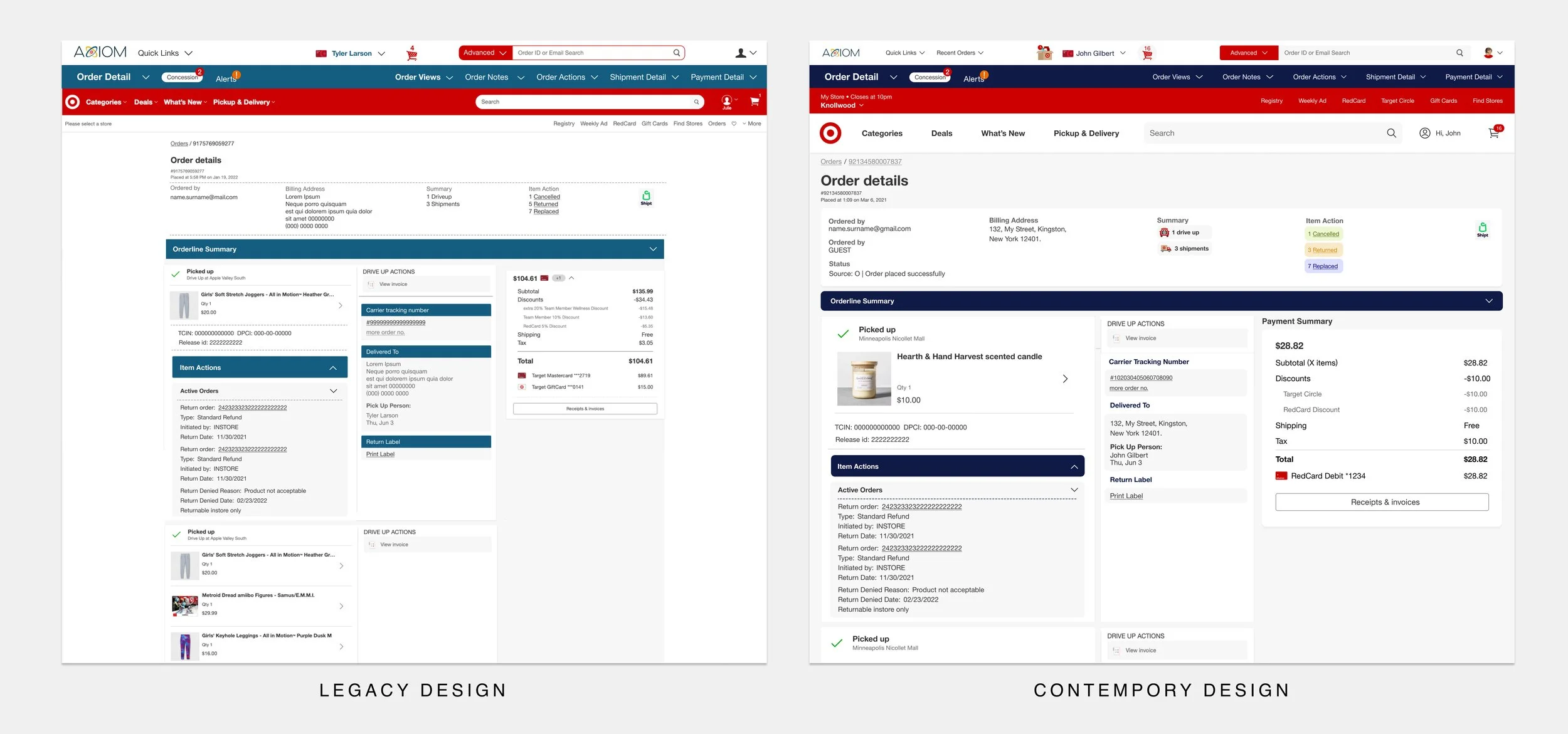
Order Detail
Intended Impact
Create a consistent experience for the agents across the applications they use daily:
This objective aims to ensure that agents encounter a uniform interface and interaction patterns across various applications they utilize regularly. By establishing consistency in design elements, navigation, terminology, and workflows, agents can seamlessly transition between different tools, reducing cognitive load and improving efficiency.
Positively impact the Average Handle Time (AHT) for key actions within the tool by standardizing the experience and improving intuitiveness:
Standardizing the user experience across the tool entails streamlining workflows, simplifying processes, and enhancing usability. By implementing intuitive design patterns and reducing friction points, agents can perform key actions more efficiently, leading to a decrease in AHT. This results in quicker resolution times, increased productivity, and improved customer satisfaction.
Improve the user experience, thereby cascading the positive impact on the SUS scores:
By focusing on enhancing the overall user experience, including factors such as usability, accessibility, and satisfaction, the goal is to positively influence the SUS (System Usability Scale) scores. Improvements in design clarity, task efficiency, and user satisfaction contribute to higher SUS scores, indicating a more favorable perception of the tool's usability and effectiveness by agents. This, in turn, reflects positively on the overall user experience and contributes to increased productivity and engagement.