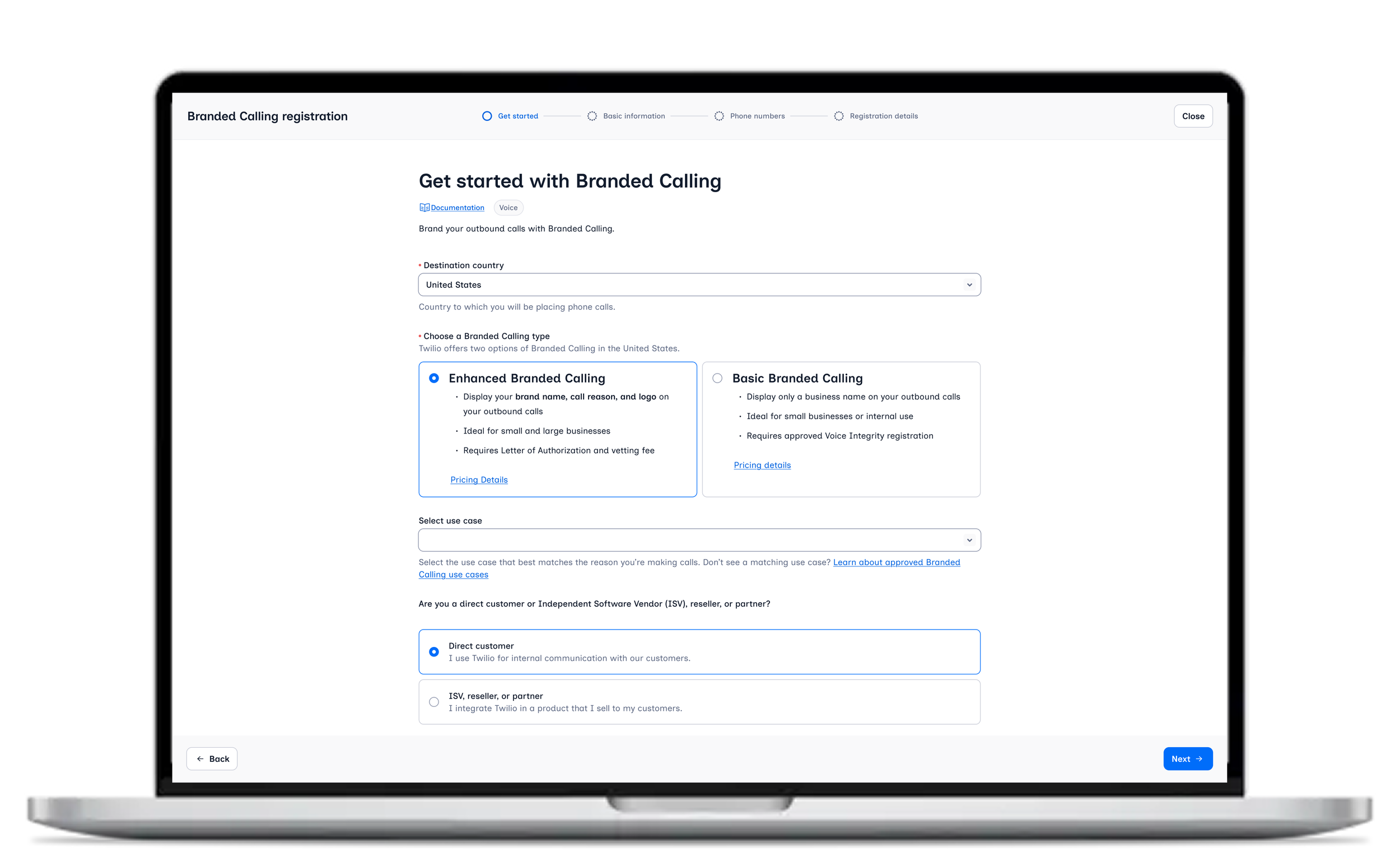
“Designing scalable onboarding infrastructure across Twilio communication products.”
Designing Compliance Infrastructure for Twilio OneConsole
Unifying onboarding and compliance experiences across Voice and Messaging products
Setting the Context
Over the years, Twilio expanded its communication ecosystem through major acquisitions including SendGrid (2018) and Segment (2020), significantly broadening its platform capabilities across customer communication, email infrastructure, customer data, and engagement workflows.
As products and onboarding systems evolved independently across acquired and existing platforms, registration experiences became increasingly fragmented — introducing inconsistencies in navigation, operational workflows, compliance handling, and platform scalability.
To address this, Twilio initiated the OneConsole platform vision — a long-term effort focused on creating a unified, scalable customer experience across communication products and onboarding ecosystems.
This project explored the design of a scalable onboarding architecture for Voice Trust products such as CNAM and Branded Calling, establishing a reusable registration framework capable of adapting across varying compliance requirements, operational states, and regional onboarding needs.
The work focused on:
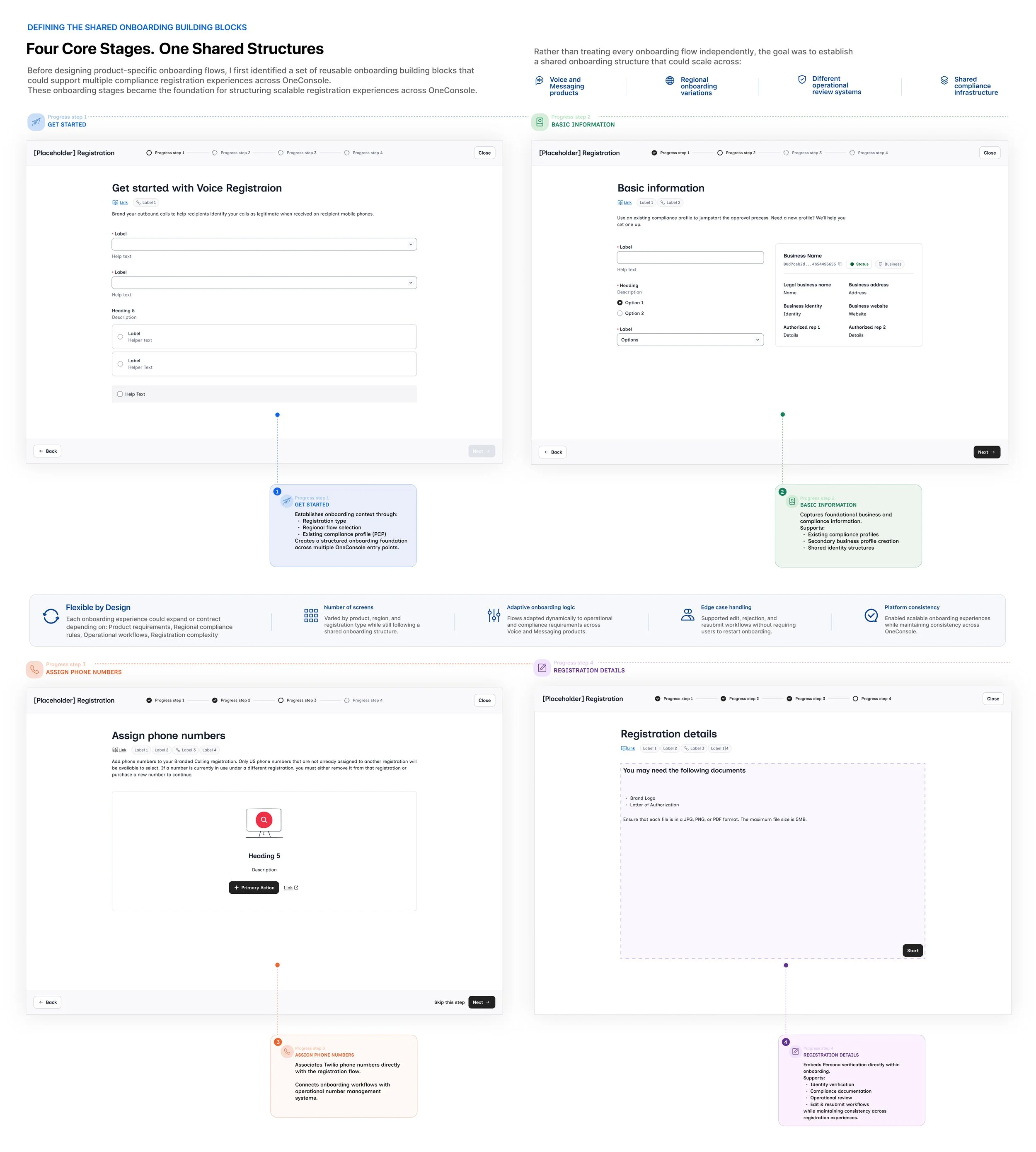
Defining reusable onboarding building blocks
Supporting Persona-driven verification workflows
Enabling adaptive registration pathways
Reducing onboarding fragmentation across products
Aligning onboarding patterns with the evolving OneConsole platform and design system direction
Rather than designing isolated registration forms, the project established a flexible onboarding framework intended to scale across Twilio’s expanding communication ecosystem.
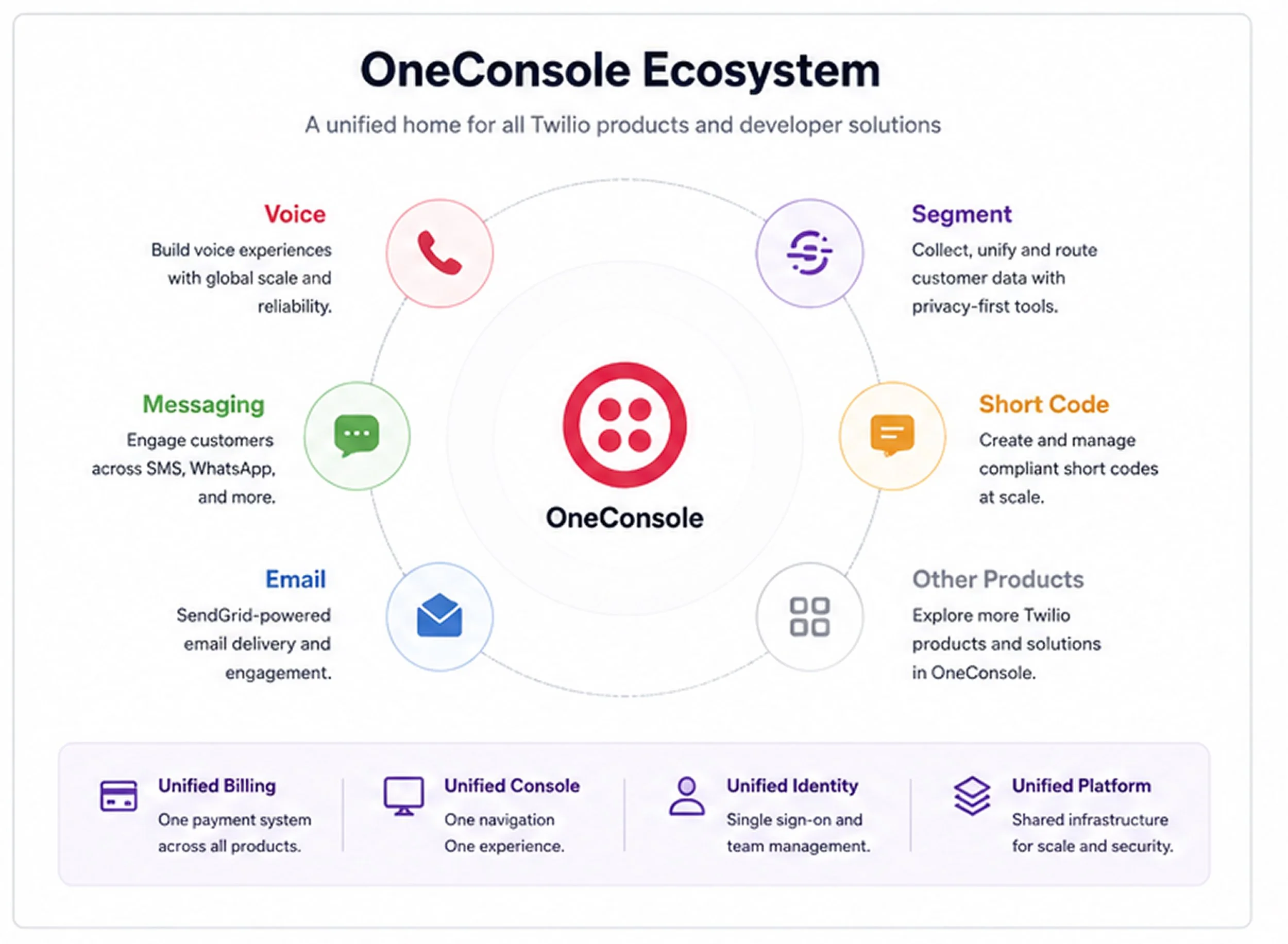
Twilio was transitioning multiple communication products into OneConsole — a unified platform experience designed to bring products like Voice, Messaging, Segment, and SendGrid under a single ecosystem.
As part of this transition, onboarding and compliance workflows across Voice and Messaging products needed to evolve from fragmented product-specific experiences into a scalable and consistent onboarding system.
MY ROLE
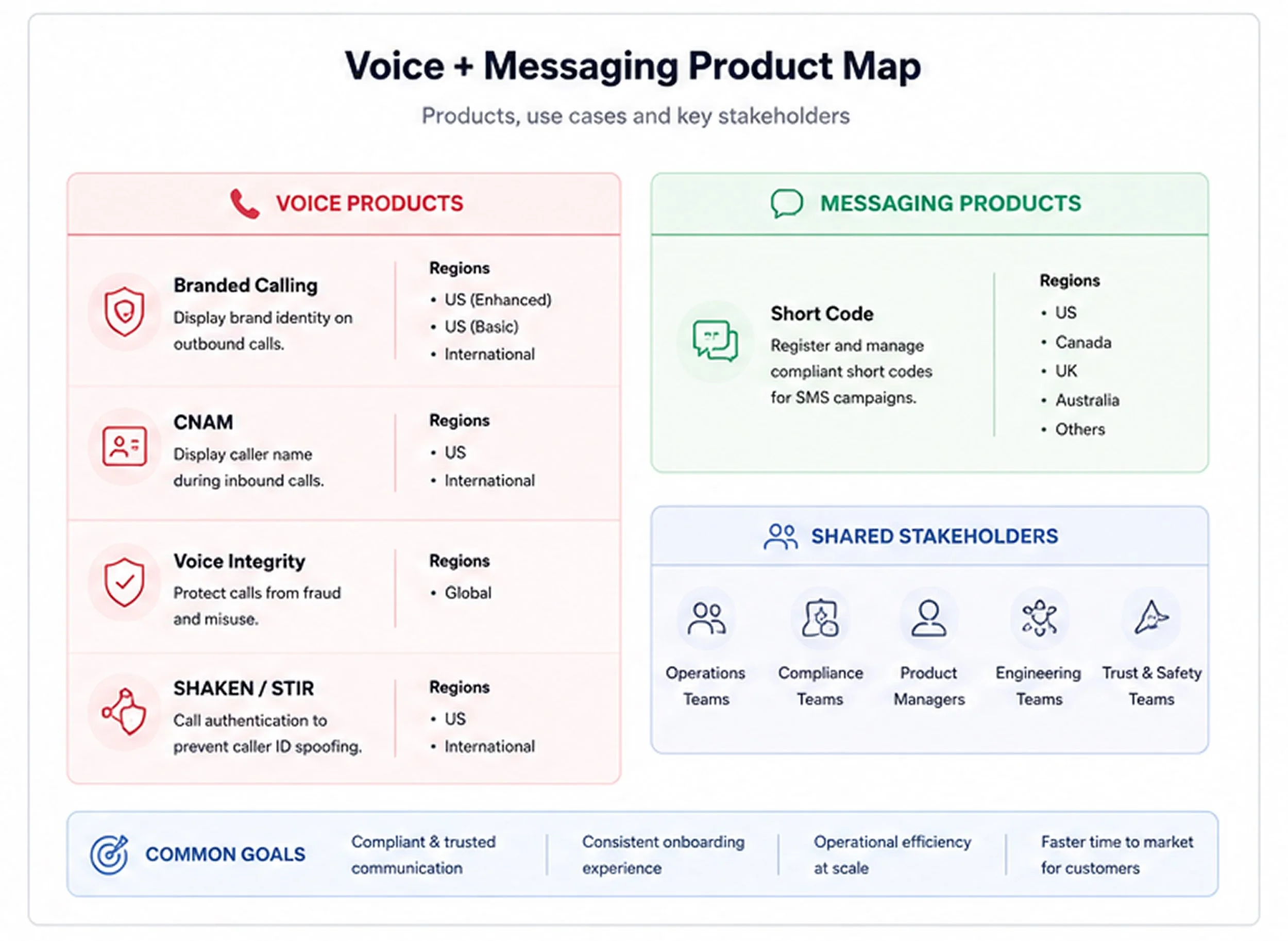
I worked on onboarding and compliance experiences across Voice products such as Branded Calling, CNAM, Voice Integrity, and SHAKEN/STIR, while also contributing to Messaging onboarding experiences like Short Code registration.
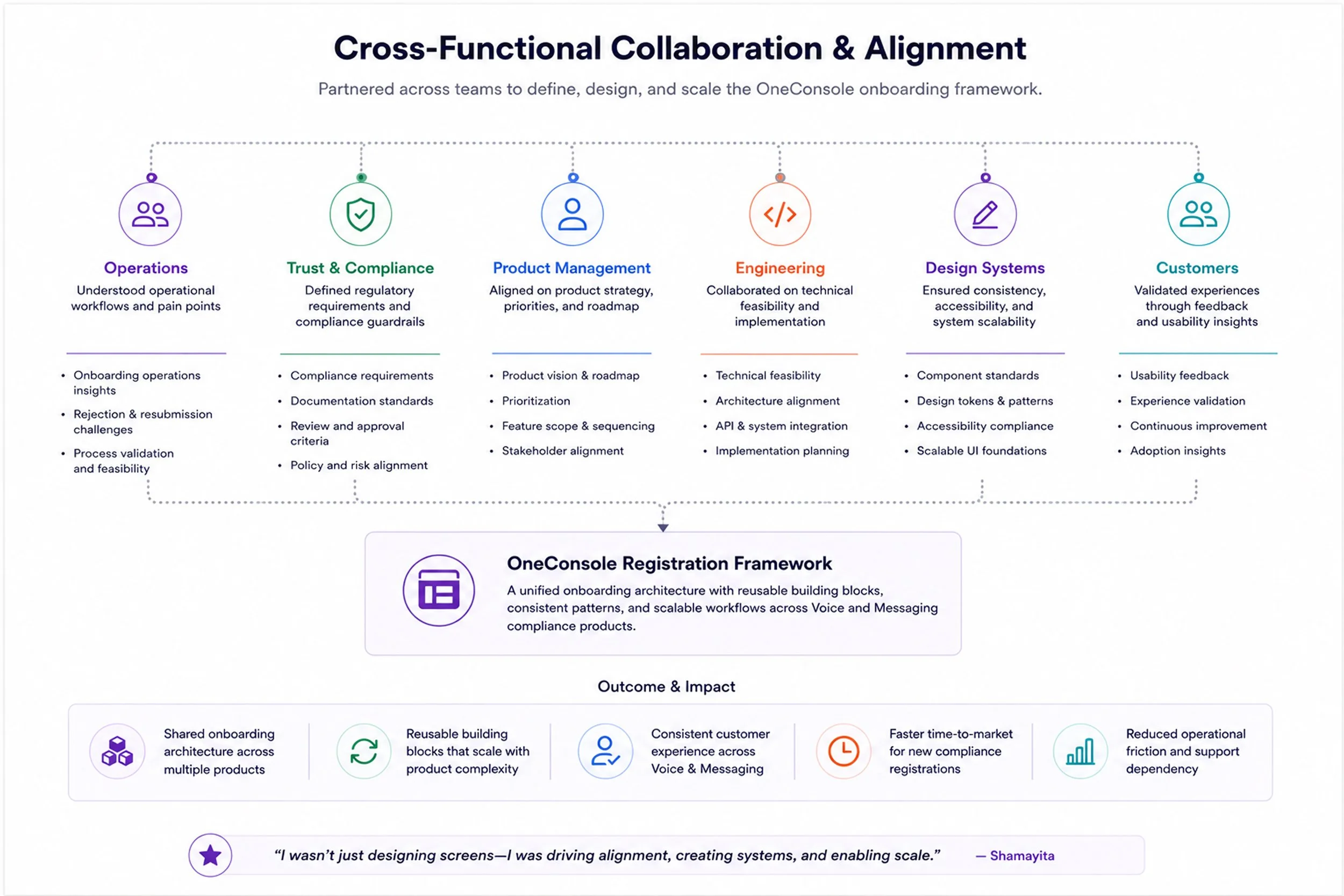
My role extended beyond designing screens. The challenge involved aligning operational workflows, regional compliance requirements, evolving design systems, and multiple product stakeholders into a coherent onboarding experience that engineering teams could successfully ship.
PROJECT OVERVIEW

WHY ONECONSOLE WAS NEEDED
Twilio’s platform ecosystem had expanded significantly through acquisitions such as SendGrid in 2018 and Segment in 2020, introducing multiple product experiences, onboarding systems, and operational workflows that evolved independently over time.
As communication products and compliance onboarding requirements continued to scale, registration experiences across Voice Trust products became increasingly fragmented — creating inconsistencies in navigation, onboarding logic, operational handling, and platform maintainability.
Several onboarding experiences were still optimized around product-specific operational requirements rather than a unified customer journey, resulting in duplicated workflows and varying registration experiences across the ecosystem.
To address this, Twilio initiated the OneConsole initiative — a long-term platform unification effort focused on building a more scalable, integrated, and consistent experience across products and acquired platforms.
This initiative also marked the gradual transition from the existing Paste Design System toward a more unified OneConsole platform architecture and onboarding framework.
The onboarding architecture explored in this project became part of that larger platform evolution.
EVOLVING TOWARD ONECONSOLE
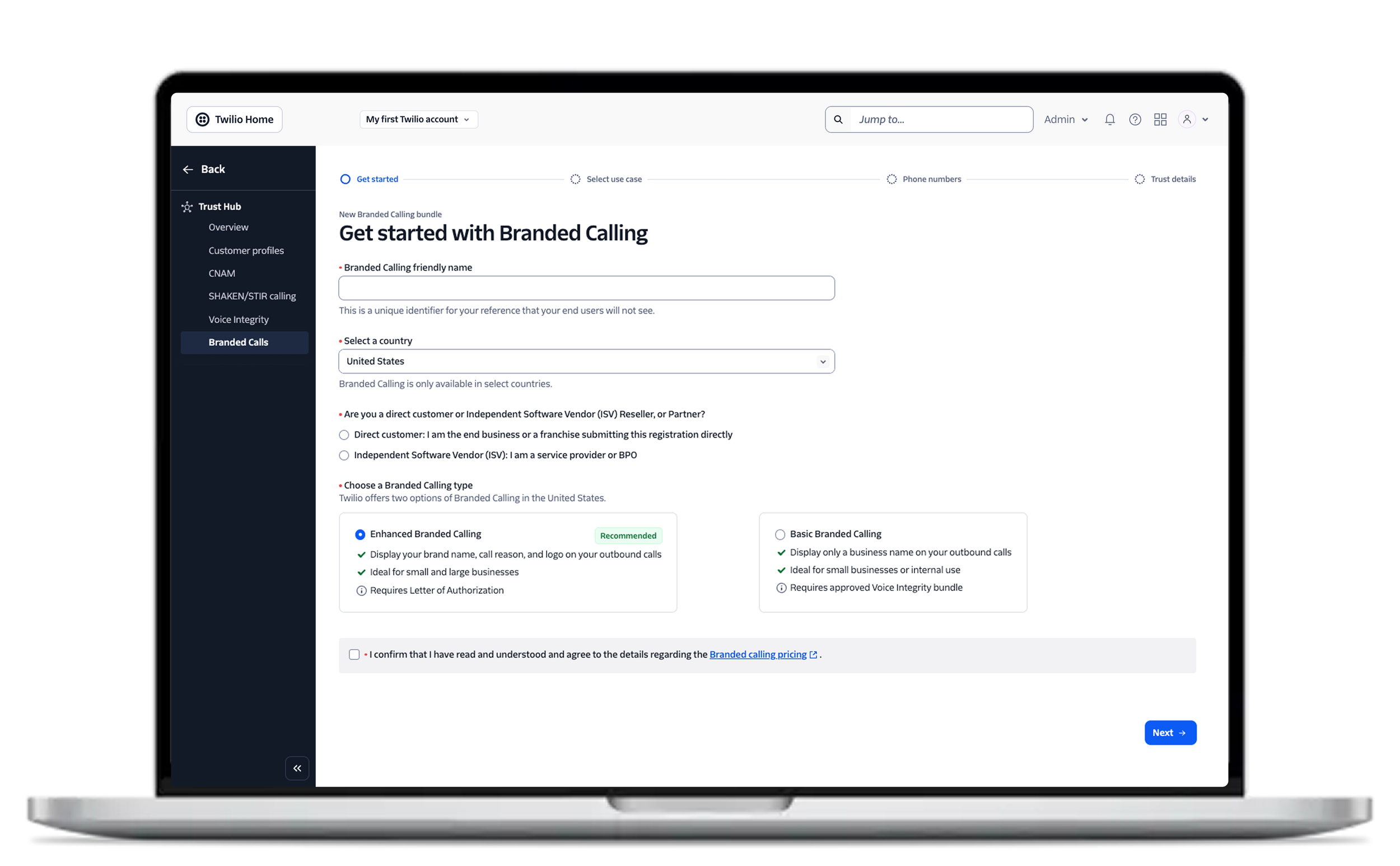
Before diving into the onboarding architecture and reusable registration model, here’s a preview of how the final OneConsole onboarding experience evolved across communication products.
The updated experience introduced:
A clearer step-by-step onboarding structure
Better use case guidance and contextual decision-making
Improved scalability across products and regions
The transformation focused on simplifying fragmented compliance workflows into a more guided, scalable, and operationally aligned registration experience.
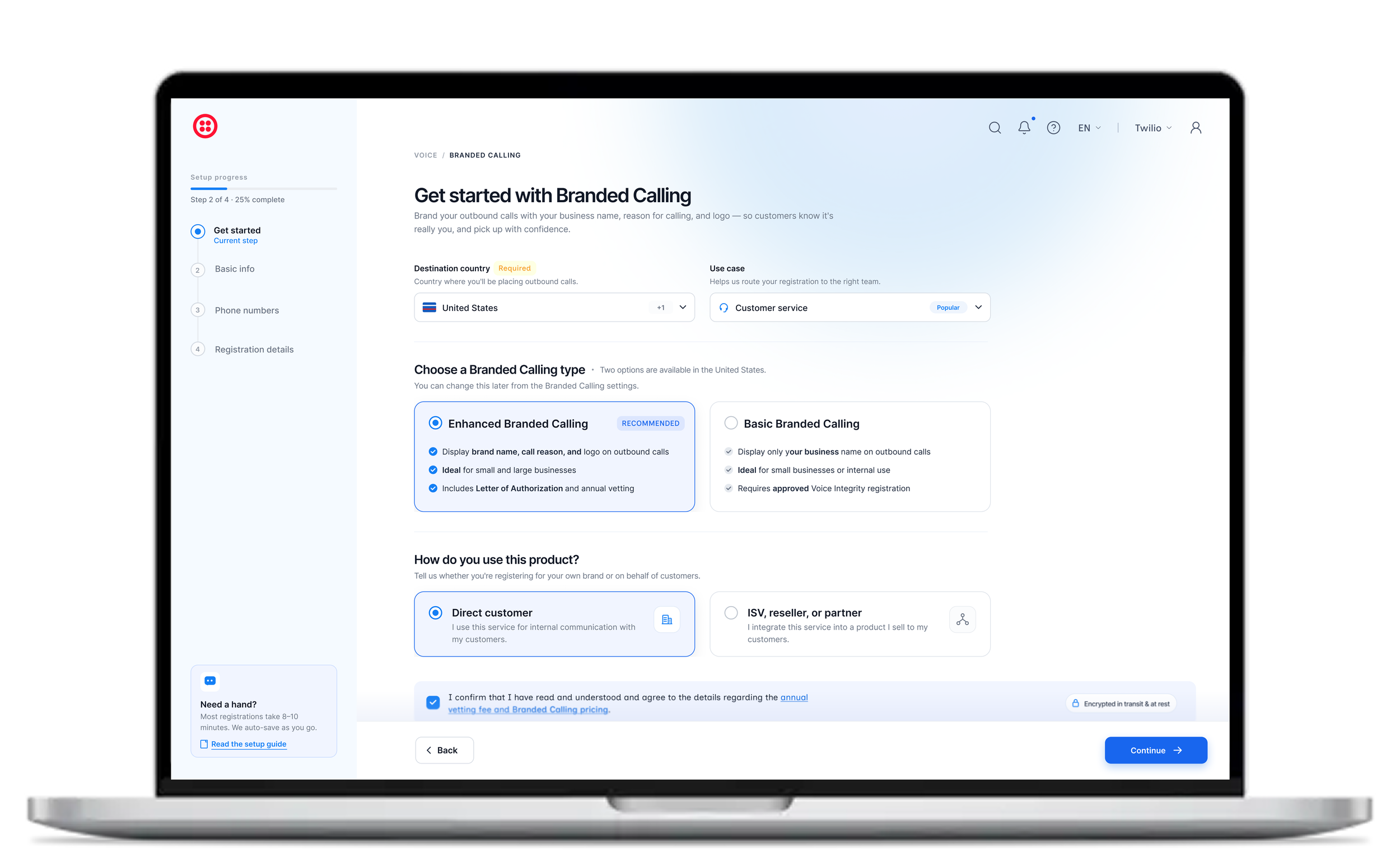
Reduced operational ambiguity during registration
Alignment with the evolving OneConsole platform direction
This became the foundation for designing a shared onboarding system that could scale across Voice Trust products such as CNAM and Branded Calling.
PHASE 1
Aug-2025 Dec-2025
THE CHALLENGE
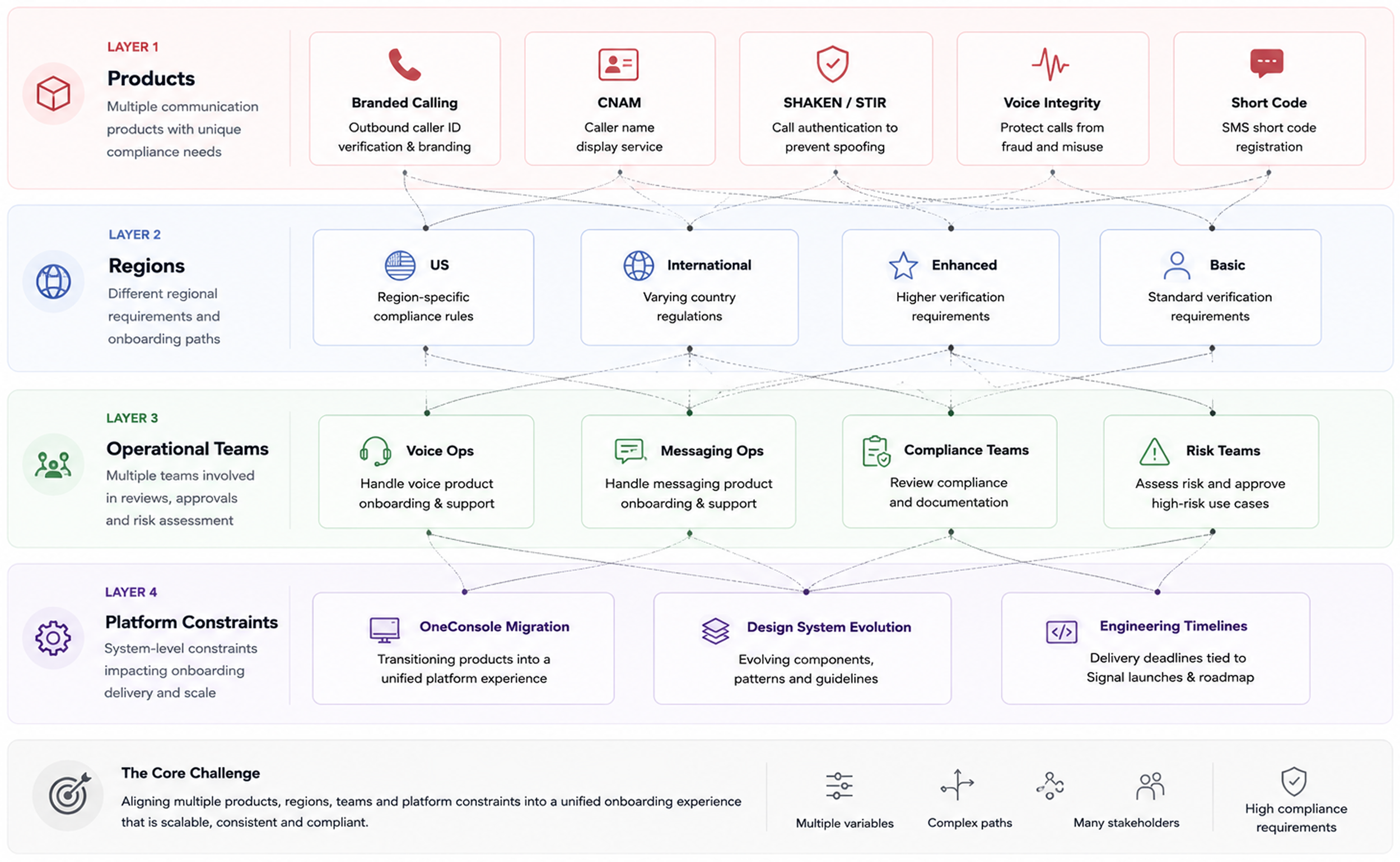
Designing onboarding infrastructure across fragmented operational models
The complexity of this project was not visual complexity — it was operational and organizational complexity.
Each Voice and Messaging product had:
Different onboarding requirements
Different operational workflows
Different regional compliance constraints
Different PMs and stakeholders
Different approval structures
For example:
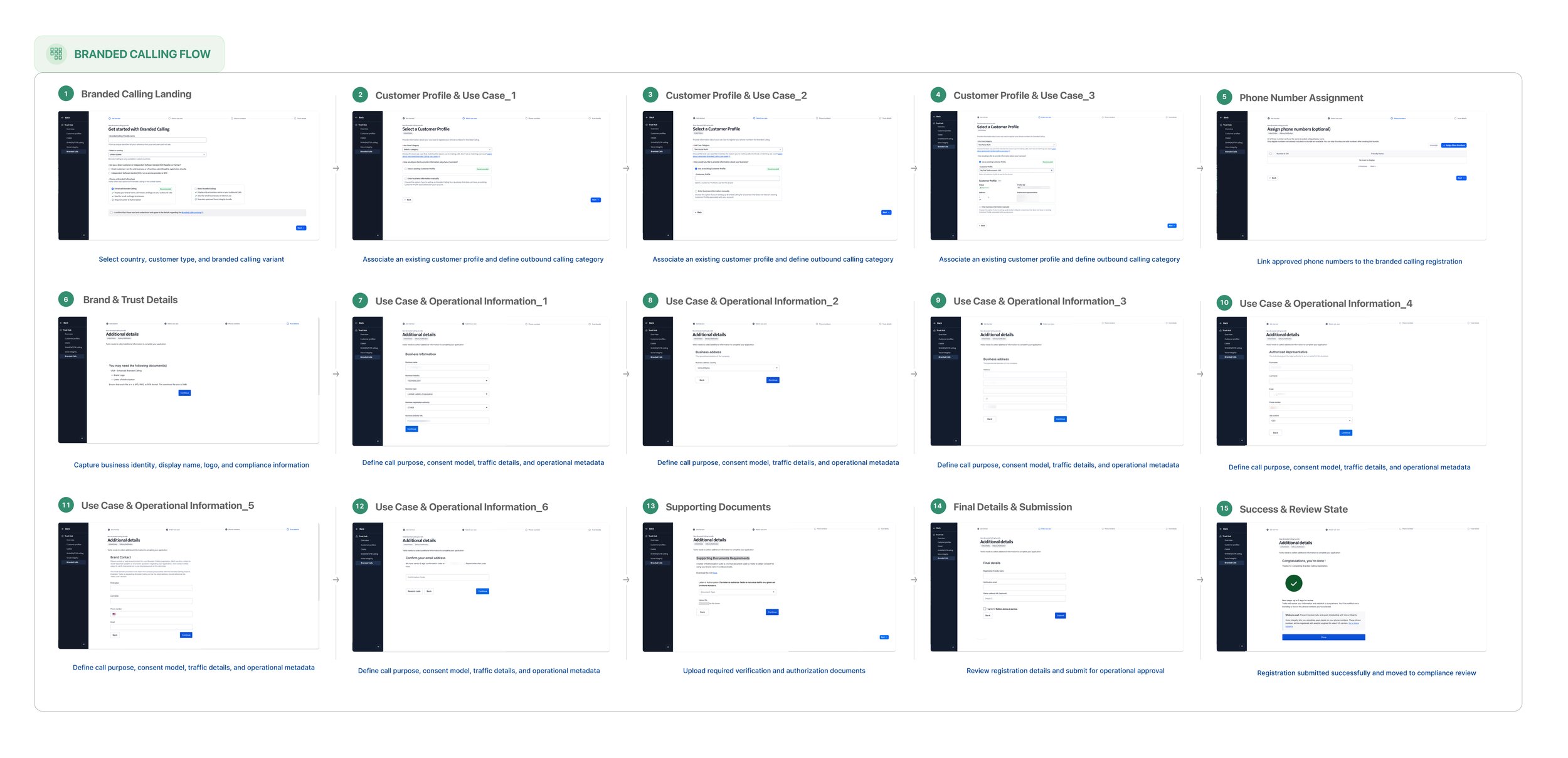
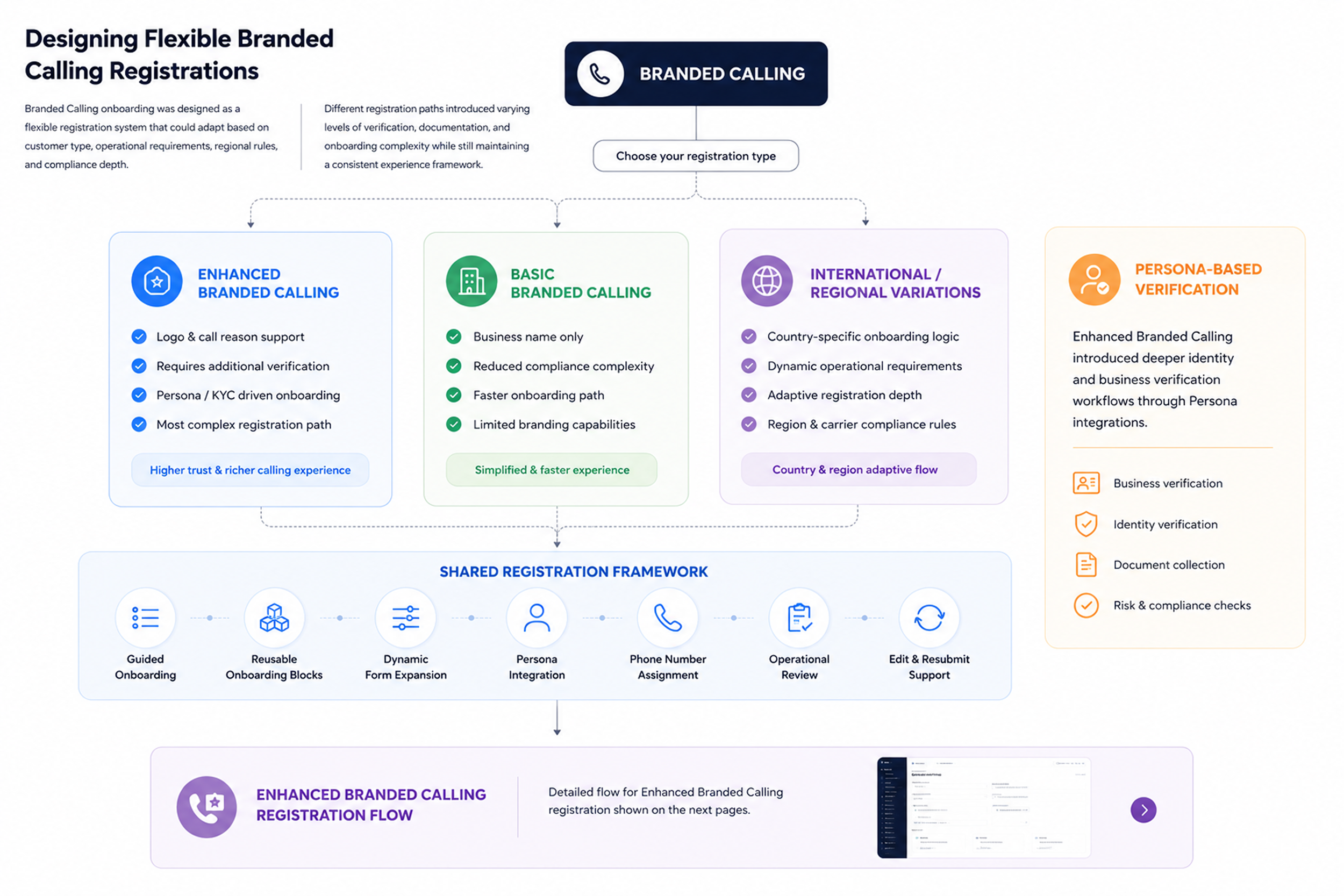
Branded Calling included separate US and International onboarding paths
US onboarding further split into Enhanced and Basic flows
Different operational teams handled different compliance reviews
Messaging products like Short Code introduced additional registration requirements
At the same time, the onboarding experience still needed to feel coherent and scalable within OneConsole.
The challenge was not simply designing forms, but structuring a system that could support multiple onboarding models while maintaining consistency across products and regions.
STRUCTURING THE ONBOARDING SYSTEM
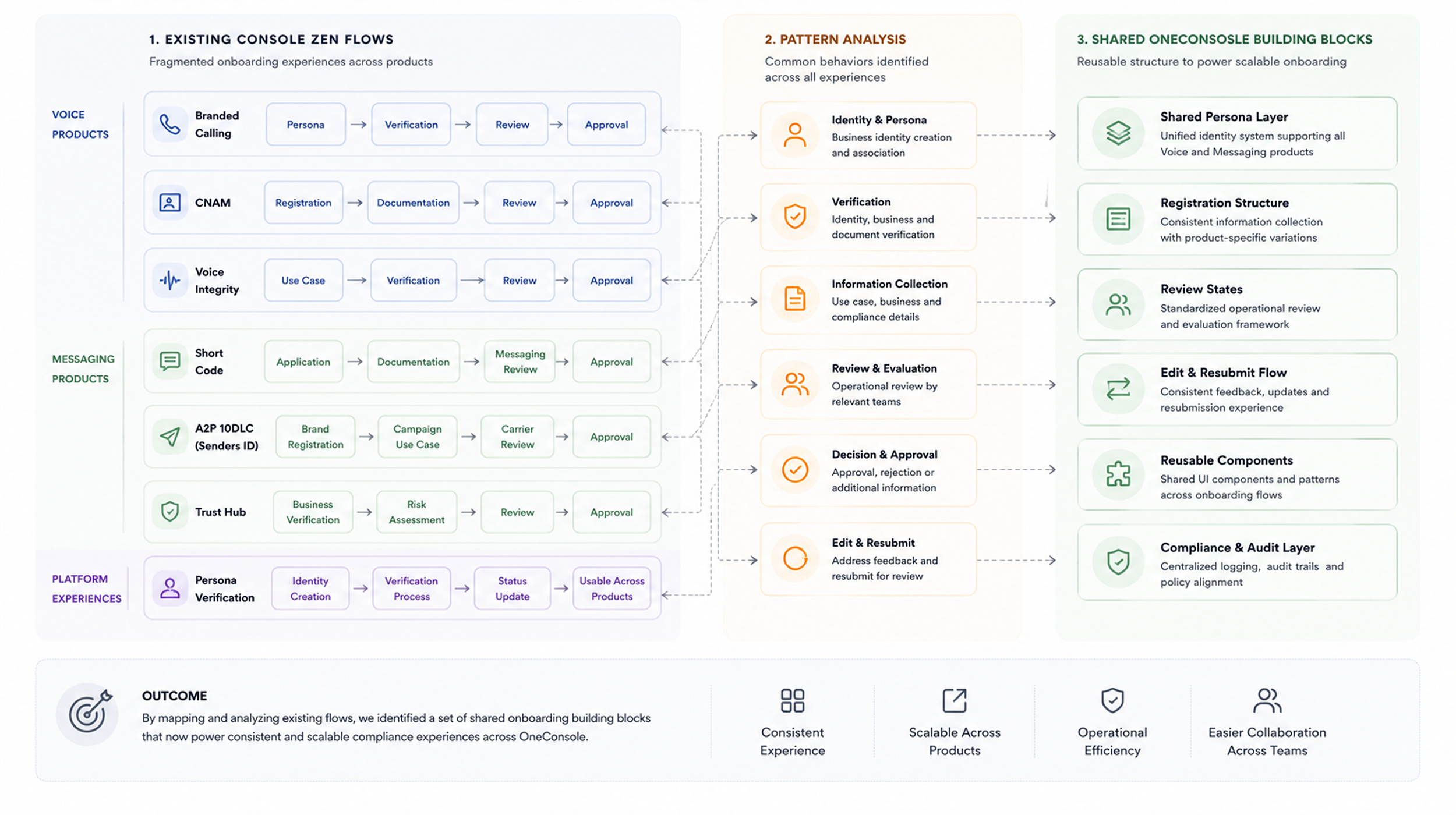
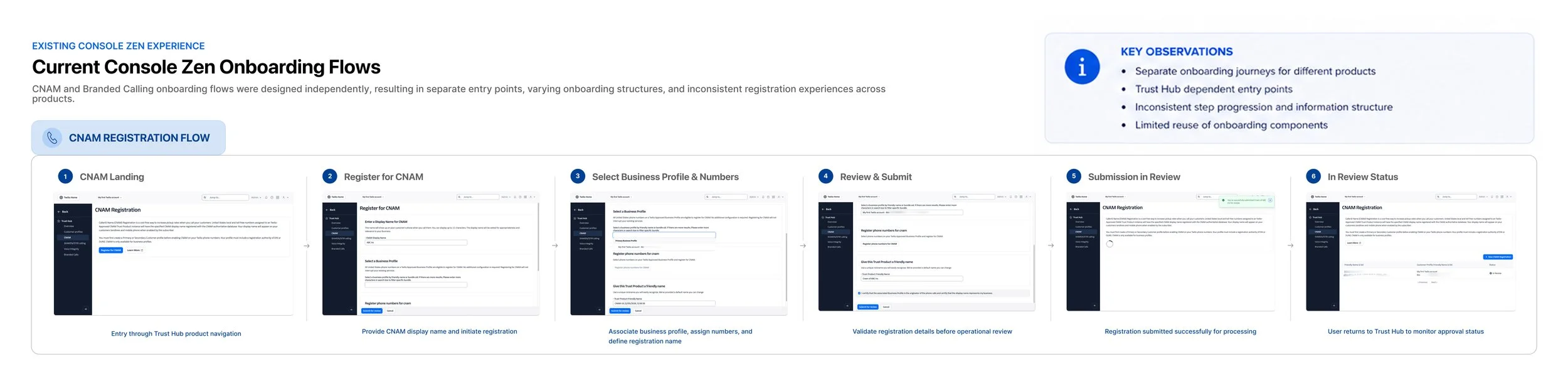
Before defining a unified onboarding direction for OneConsole, I first needed to understand how onboarding behaviors already existed across Twilio’s communication products.
Each Voice and Messaging product had evolved independently over time, resulting in fragmented onboarding structures, inconsistent registration patterns, different compliance states, and product-specific operational workflows.
To identify opportunities for shared onboarding patterns, I began mapping the existing Console Zen flows across:
Voice products
Messaging products
Trust Hub
Sender-related onboarding experiences
Persona verification workflows
Registration and compliance systems
At the same time, I closely followed how other designers across OneConsole were restructuring adjacent platform experiences during the Console Zen to OneConsole migration.
This helped establish a broader understanding of:
Shared onboarding behaviors
Emerging platform patterns
Reusable interaction structures
Cross-product onboarding expectations
Rather than redesigning each onboarding flow independently, the goal became identifying common building blocks that could support multiple onboarding systems while still allowing flexibility for product-specific operational requirements.
This work became the foundation for structuring more scalable onboarding infrastructure across OneConsole.

DEFINING THE SHARED ONBOARDING MODEL
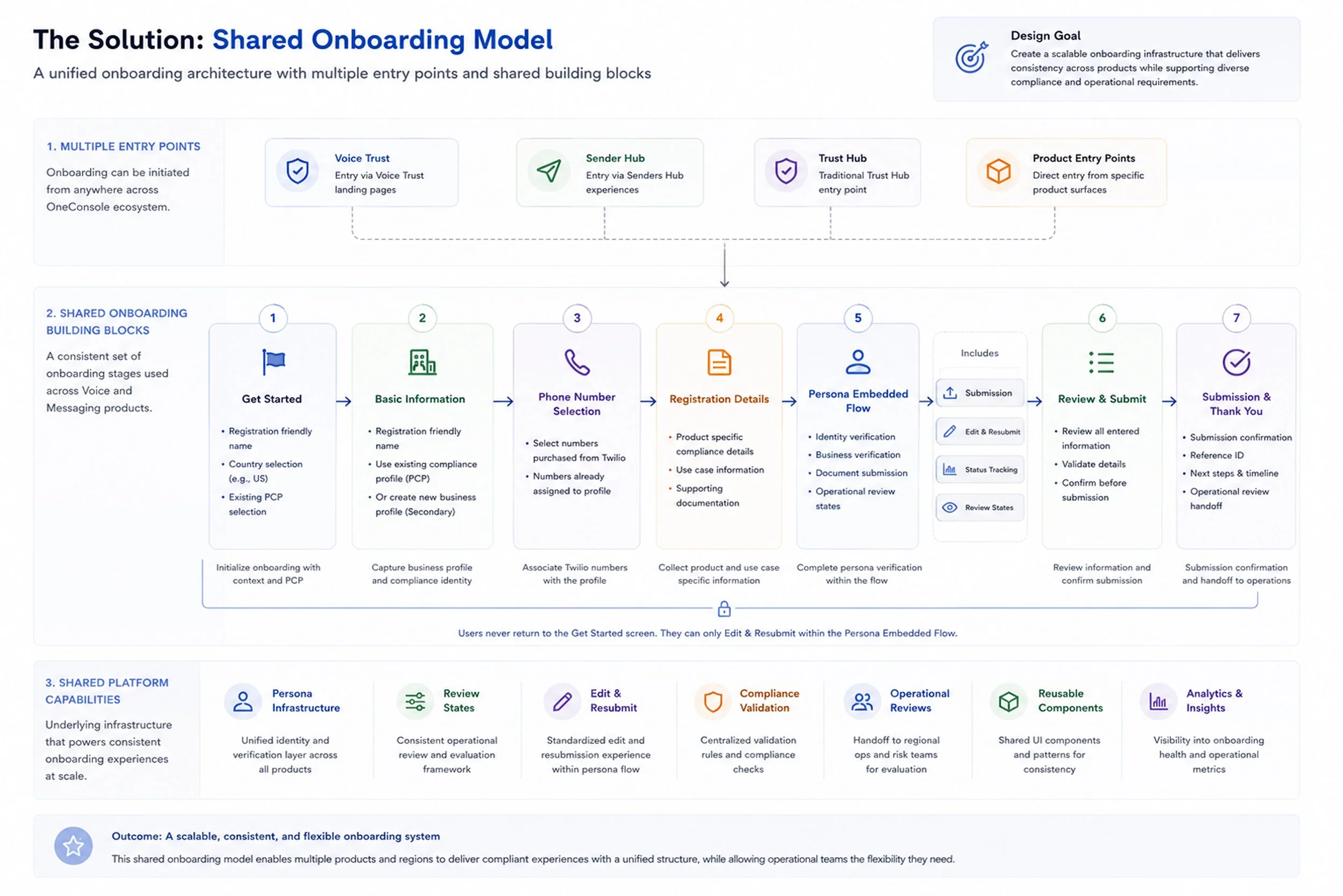
As onboarding experiences evolved from isolated product flows into a shared OneConsole ecosystem, one of the biggest challenges was creating enough structure for onboarding experiences to feel consistent across products while still supporting product-specific operational requirements.
Previously, onboarding entry points were fragmented and heavily dependent on individual product flows, with Trust Hub acting as the primary onboarding gateway for many compliance experiences.
With OneConsole, onboarding entry points expanded across multiple platform surfaces, including:
Voice Trust
Sender Hub
Trust Hub
Product-specific onboarding entry points
This introduced a new challenge:
multiple onboarding journeys now needed to behave like one coherent onboarding system.
To create consistency across these experiences, I began identifying shared onboarding behaviors across Voice and Messaging products and restructuring them into reusable onboarding building blocks.
Rather than designing every onboarding flow independently, the goal became defining a scalable onboarding structure that could support:
Multiple products
Multiple regional models
Multiple operational review systems
Shared identity verification infrastructure
Future onboarding expansion within OneConsole
This led to the creation of a shared onboarding model structured around a set of reusable onboarding stages.
VALIDATING THE SHARED ONBOARDING MODEL
Once the onboarding building blocks were defined, the next step involved validating how the shared onboarding structure could support real product registration flows across OneConsole.
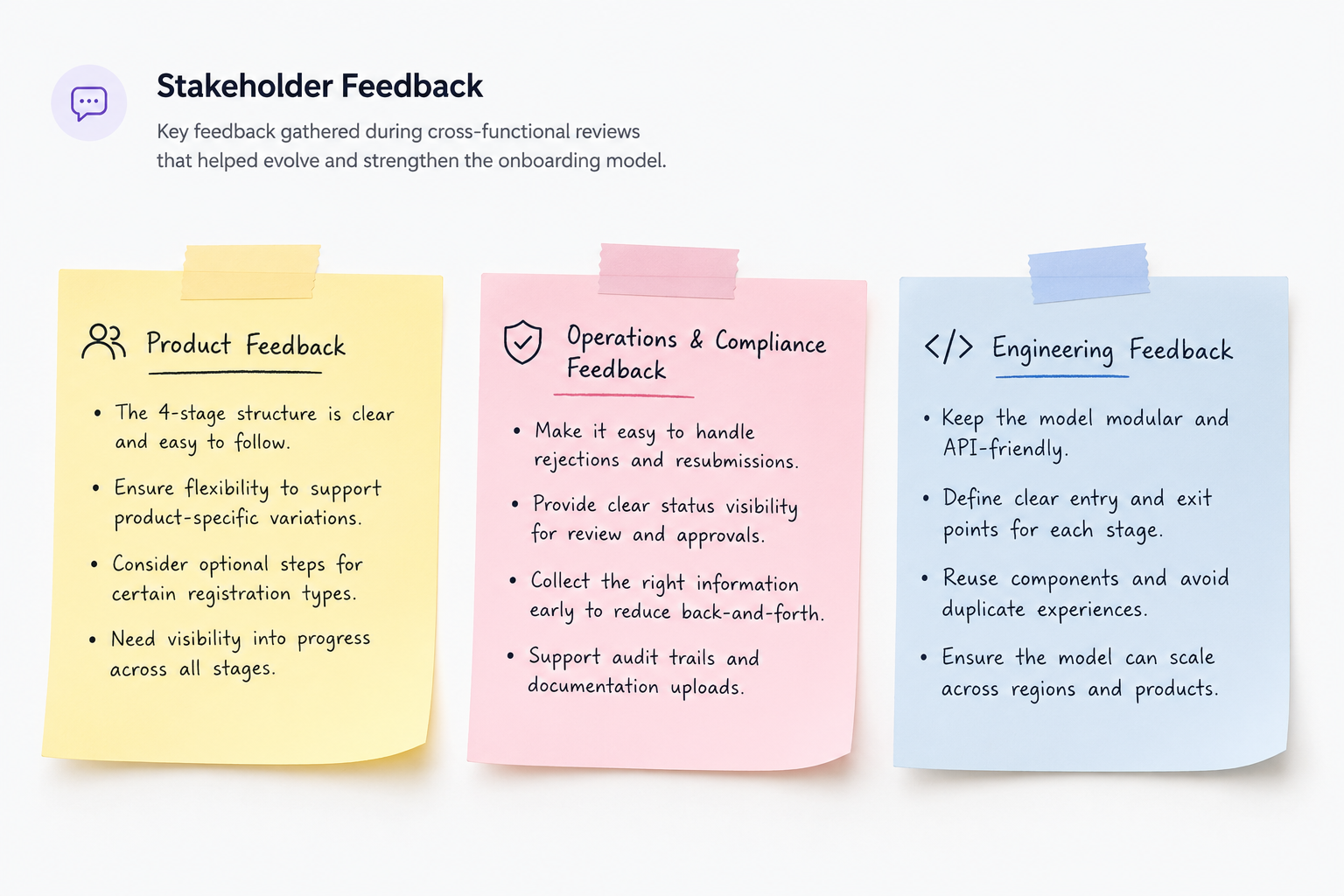
The onboarding model was reviewed collaboratively across:
Product teams
Operations teams
Compliance stakeholders
Engineering
Designers working on adjacent onboarding systems
The goal was not simply reviewing screens, but evaluating whether the onboarding structure could:
Scale across products
Support regional onboarding variations
Handle operational review workflows
Adapt to evolving compliance requirements
Remain implementation-ready within OneConsole constraints
These discussions helped identify:
Shared onboarding behaviors
Product-specific exceptions
Reusable interaction patterns
Operational edge cases
Opportunities for system standardization
The onboarding architecture evolved iteratively through continuous alignment between product, operations, and design teams before being applied to production-ready registration flows.
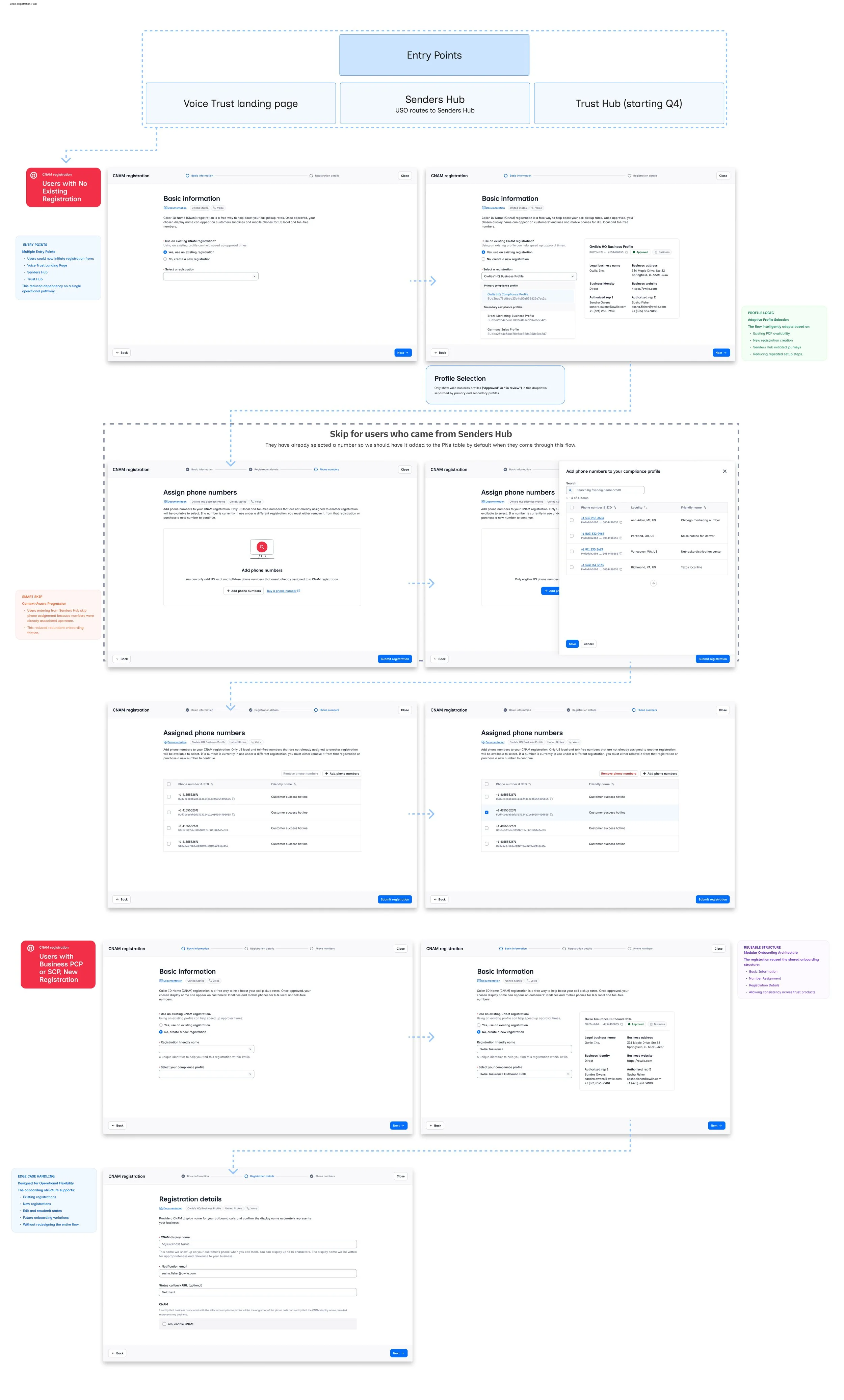
APPLYING THE SHARED MODEL TO A REAL REGISTRATION
CNAM Registration Flow
Using the shared onboarding framework, I redesigned the CNAM registration experience to support multiple entry points, reusable onboarding patterns, and adaptive user journeys based on registration state.
SCALING THE SHARED MODEL ACROSS
The reusable onboarding architecture was later extended into more complex registration workflows such as Branded Calling, while simultaneously aligning with the evolving OneConsole platform and design system migration strategy.
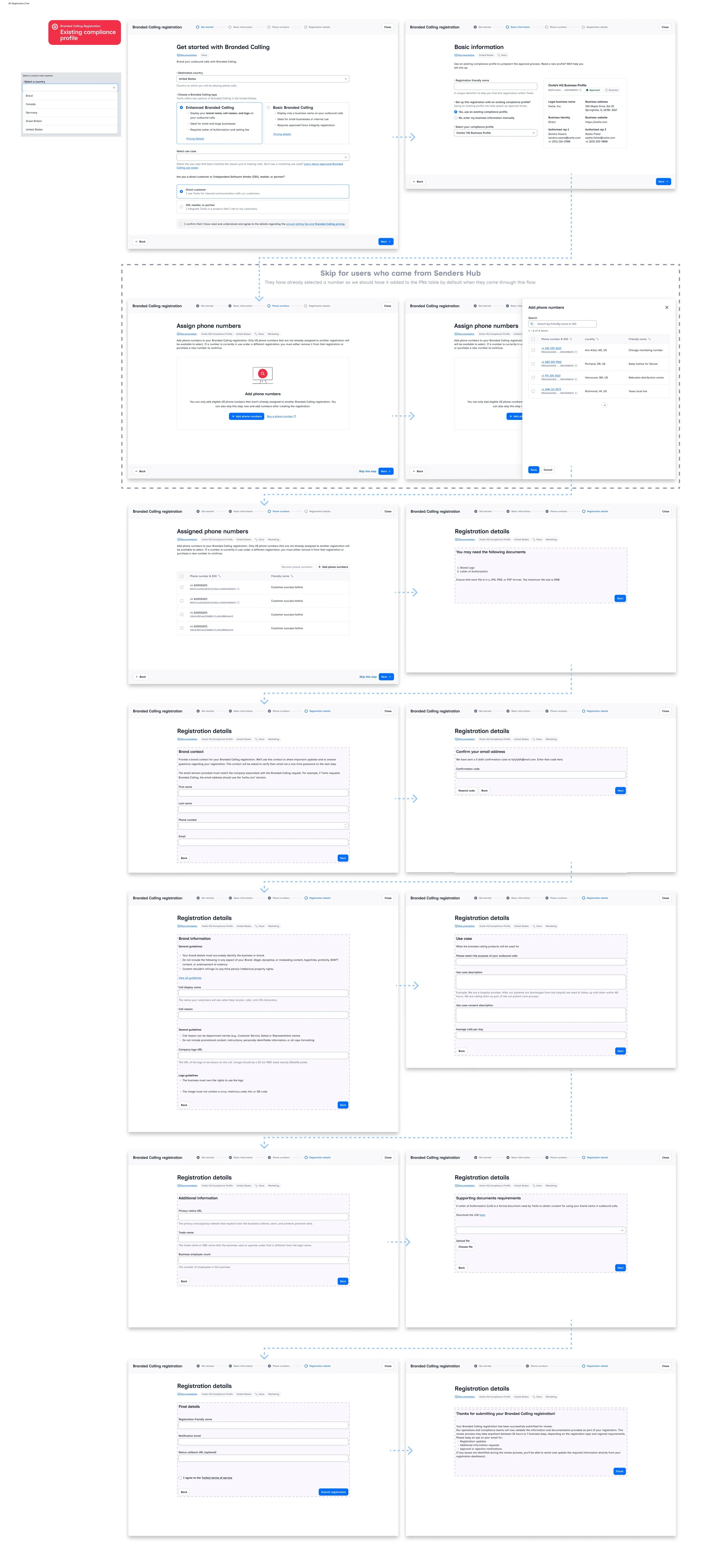
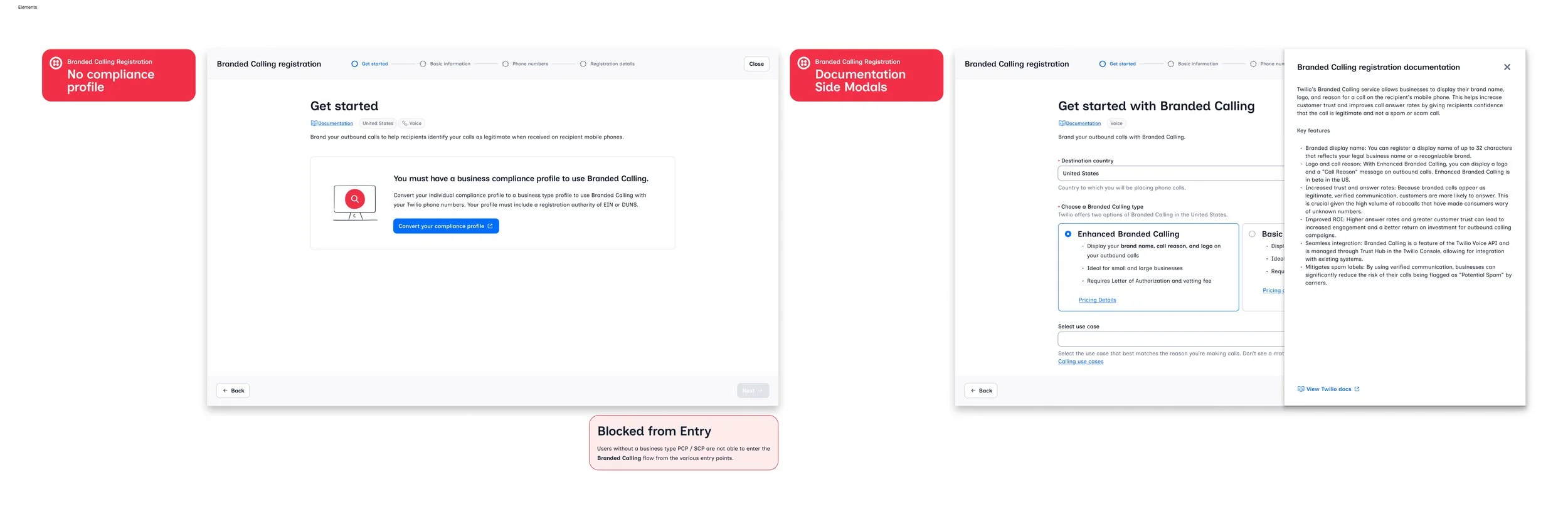
OPERATIONAL SAFEGUARDS & GUIDED REGISTRATION
To support scalable onboarding, the experience introduced validation checkpoints, contextual documentation, and compliance-aware entry conditions.
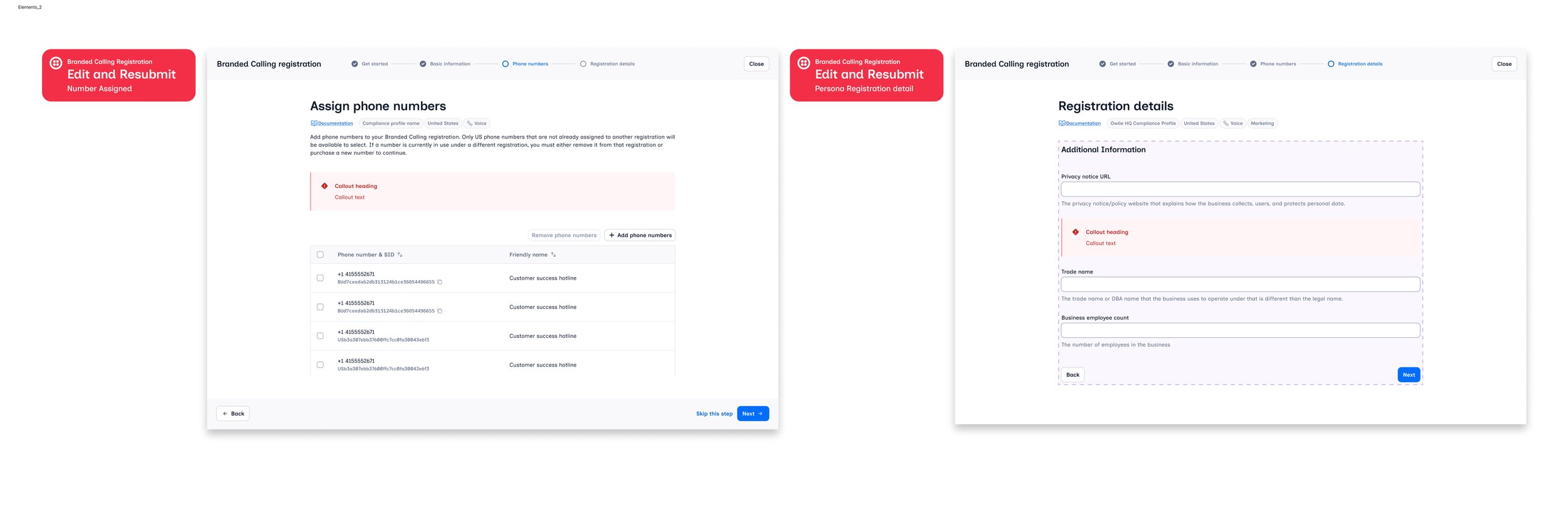
INTELLIGENT REJECTION & RESUBMISSION FLOWS
Designing contextual recovery experiences for complex compliance onboarding journeys.
Existing Experience
Rejected registrations redirected users back to the registration landing page with a generic error banner.
Users often struggled to identify which specific section required correction
Operational Insight
Design Direction
Support and operations teams frequently had to manually guide customers through rejected submissions because backend review errors were not surfaced contextually within the onboarding flow.
The redesigned framework introduced:
Step-level rejection routing
Contextual callout banners
Inline field validation
Deep-link based recovery flows
Users were redirected directly to the affected section instead of restarting the entire journey.
EXPECTED OPERATIONAL OUTCOMES
The onboarding architecture was designed not only to unify registration experiences, but also to improve operational scalability across Twilio’s evolving compliance ecosystem.
Reduced Operational Dependency
Contextual validation and guided recovery flows reduced reliance on support teams during registration correction cycles.
Improved Registration Clarity
Step-level onboarding and contextual guidance improved user understanding across complex compliance workflows.
Scalable Cross-product Architecture
Reusable onboarding patterns allowed Voice and Messaging compliance products to scale without rebuilding registration systems independently.
Future-ready Platform Direction
The shared onboarding framework aligned with Twilio’s long-term OneConsole platform migration and evolving design system direction.
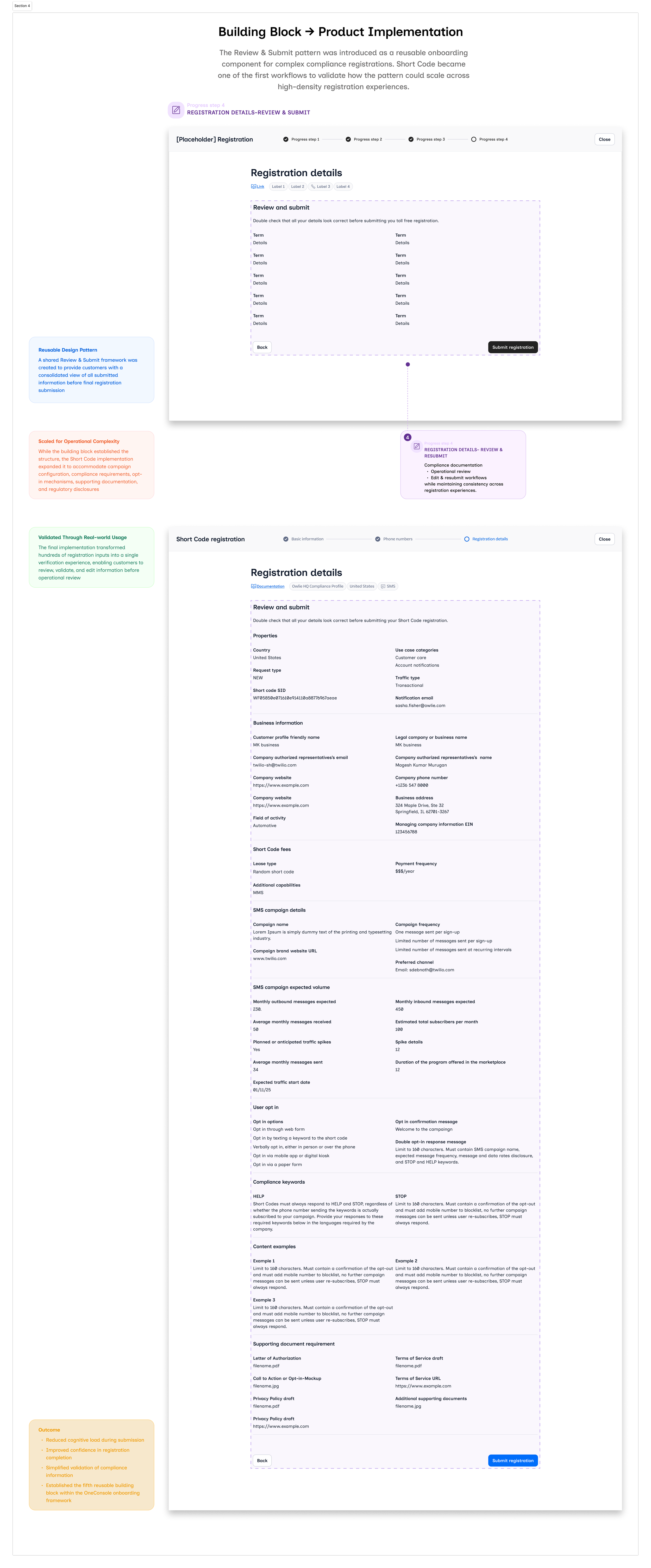
EXTENDING THE SHARED ONBOARDING ARCHITECTURE TO SHORTCODE REGISTRATION
After validating the shared onboarding architecture across Voice Trust products such as CNAM, SHAKEN/STIR, Voice Integrity, and Branded Calling, the next challenge involved adapting the same framework for Short Code registrations within Twilio Messaging.
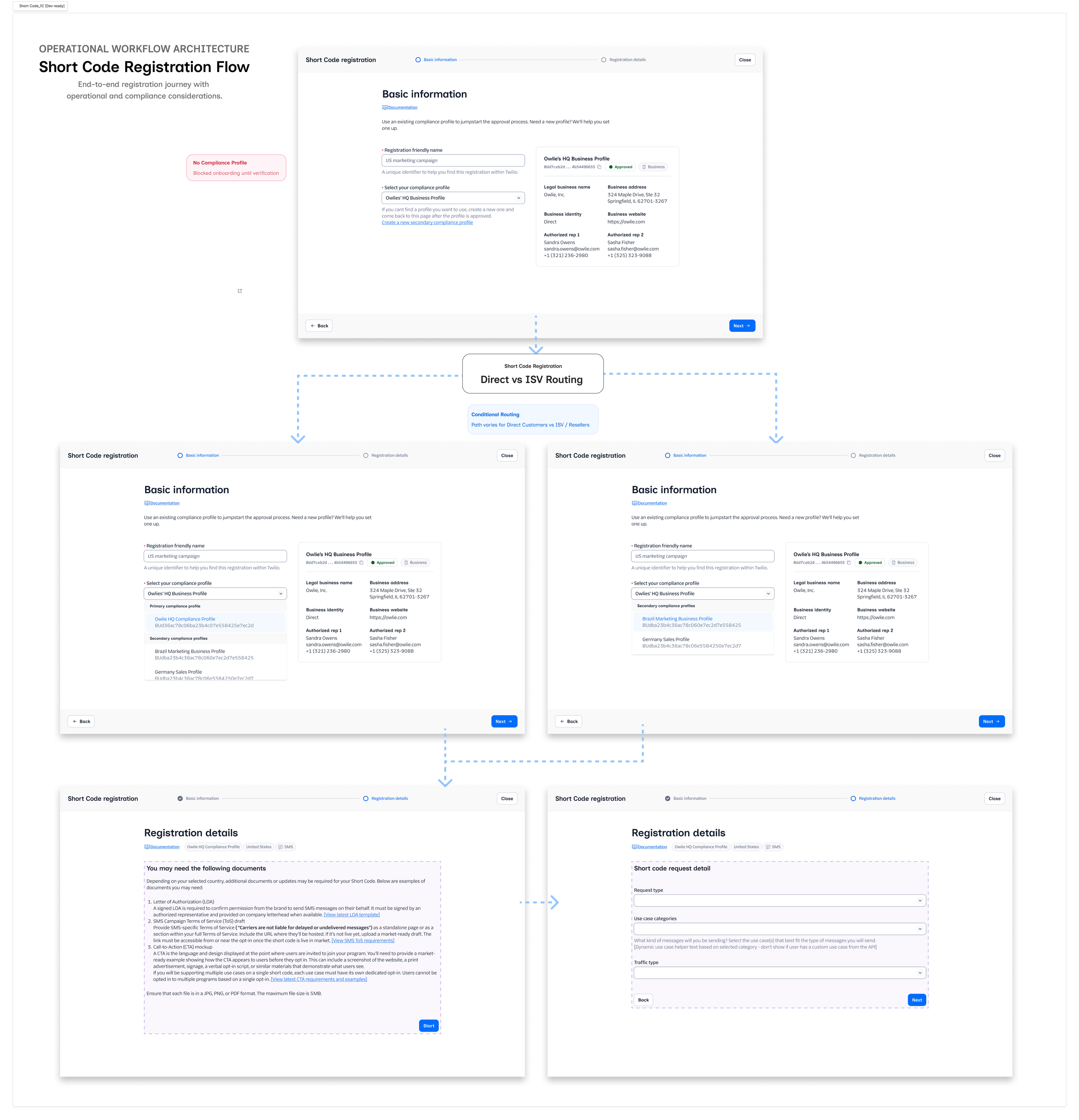
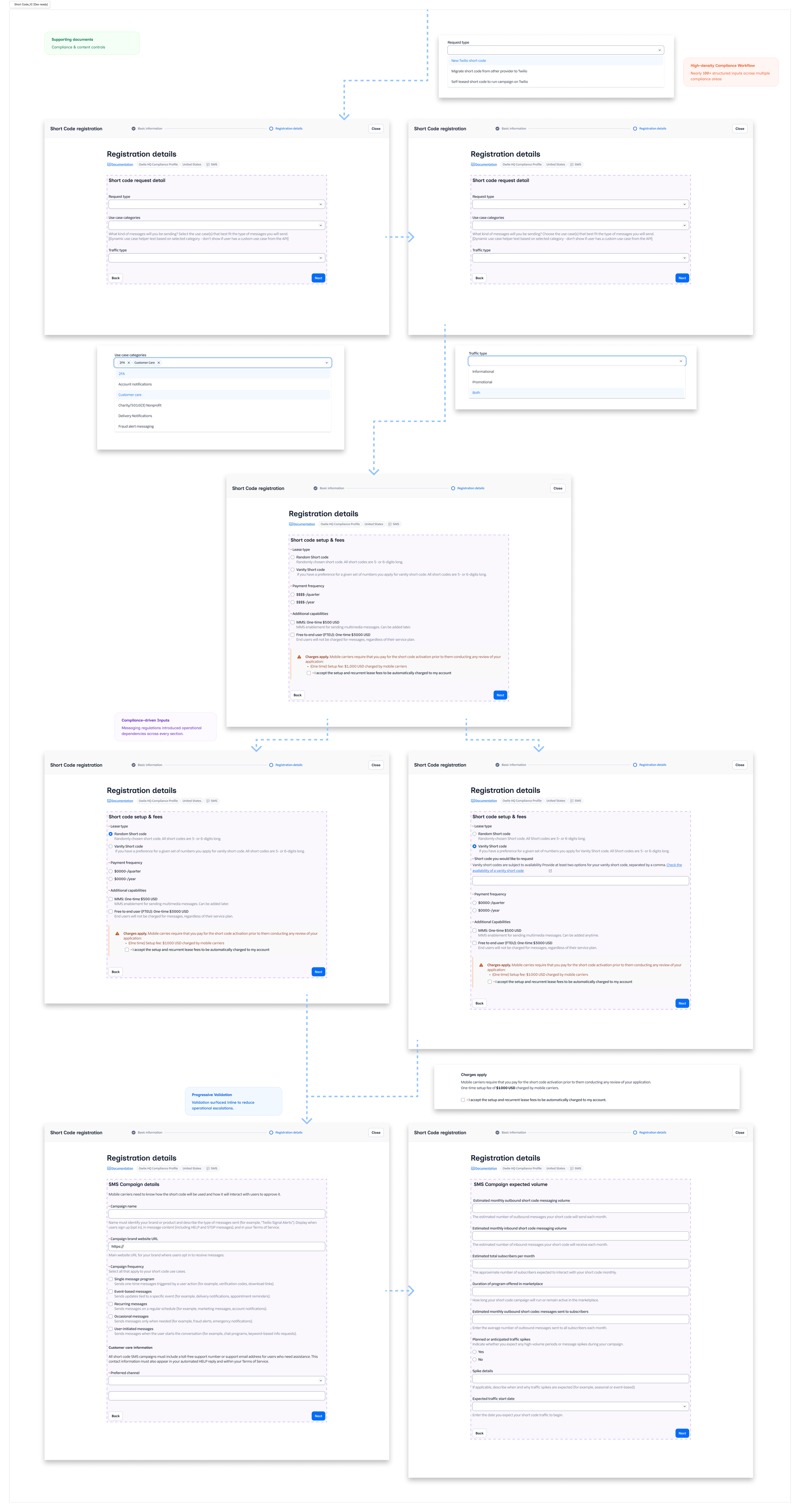
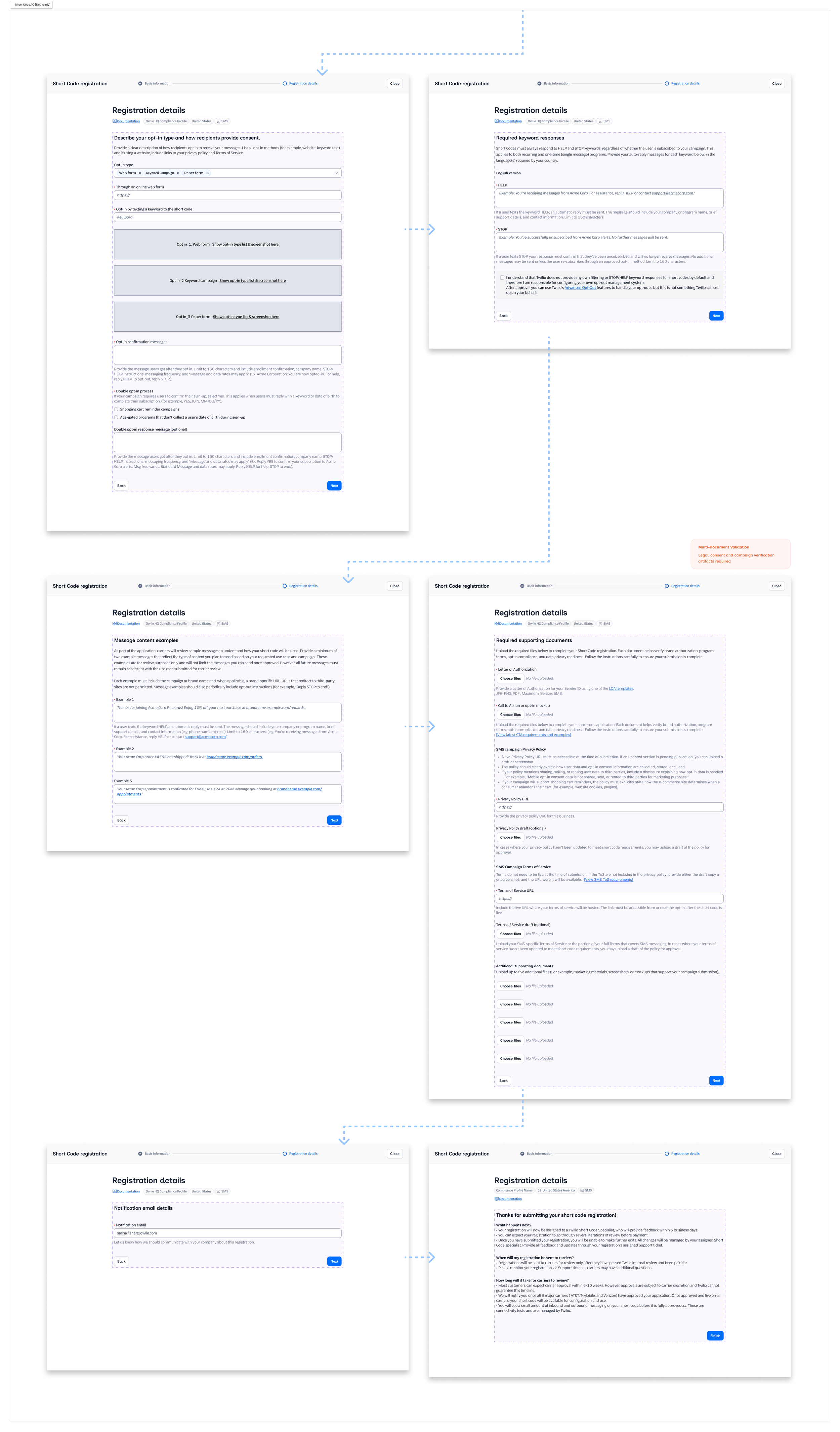
Unlike Voice Trust registrations, Short Code onboarding introduced significantly higher operational and compliance complexity. The workflow required support for large-scale messaging verification, extensive documentation collection, campaign-level compliance validation, and customer-specific registration pathways across Direct and ISV onboarding models.
Additionally, Short Code registrations had never previously supported Persona-integrated verification workflows, making this an important architectural shift within the onboarding ecosystem.
The objective was to evolve the shared onboarding framework into a scalable and reusable registration system capable of supporting highly detailed, document-heavy compliance journeys while maintaining consistency with Twilio’s evolving OneConsole onboarding direction.
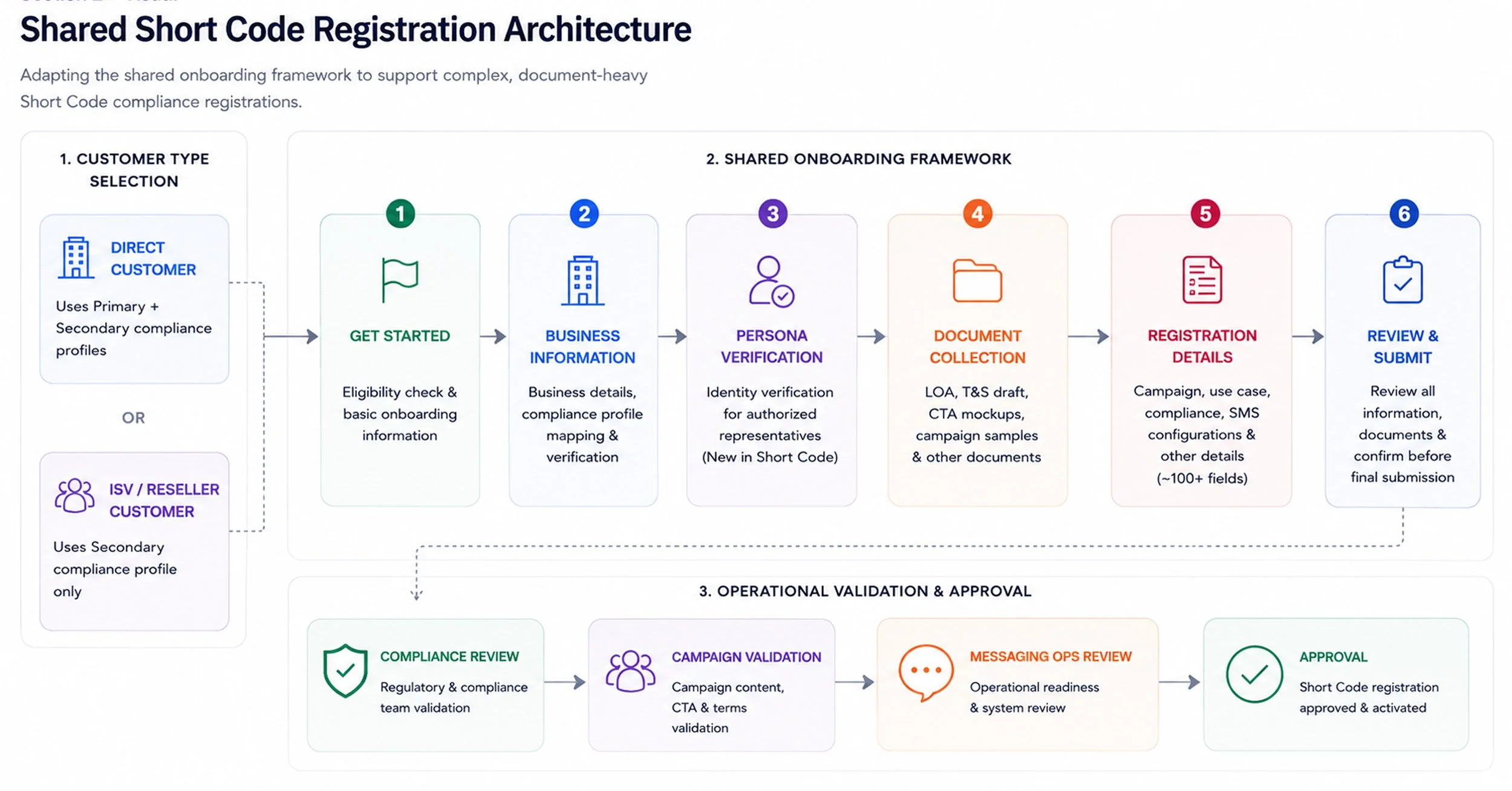
DESIGNING FOR HIGH-DENSITY COMPLIANCE WORKFLOWS
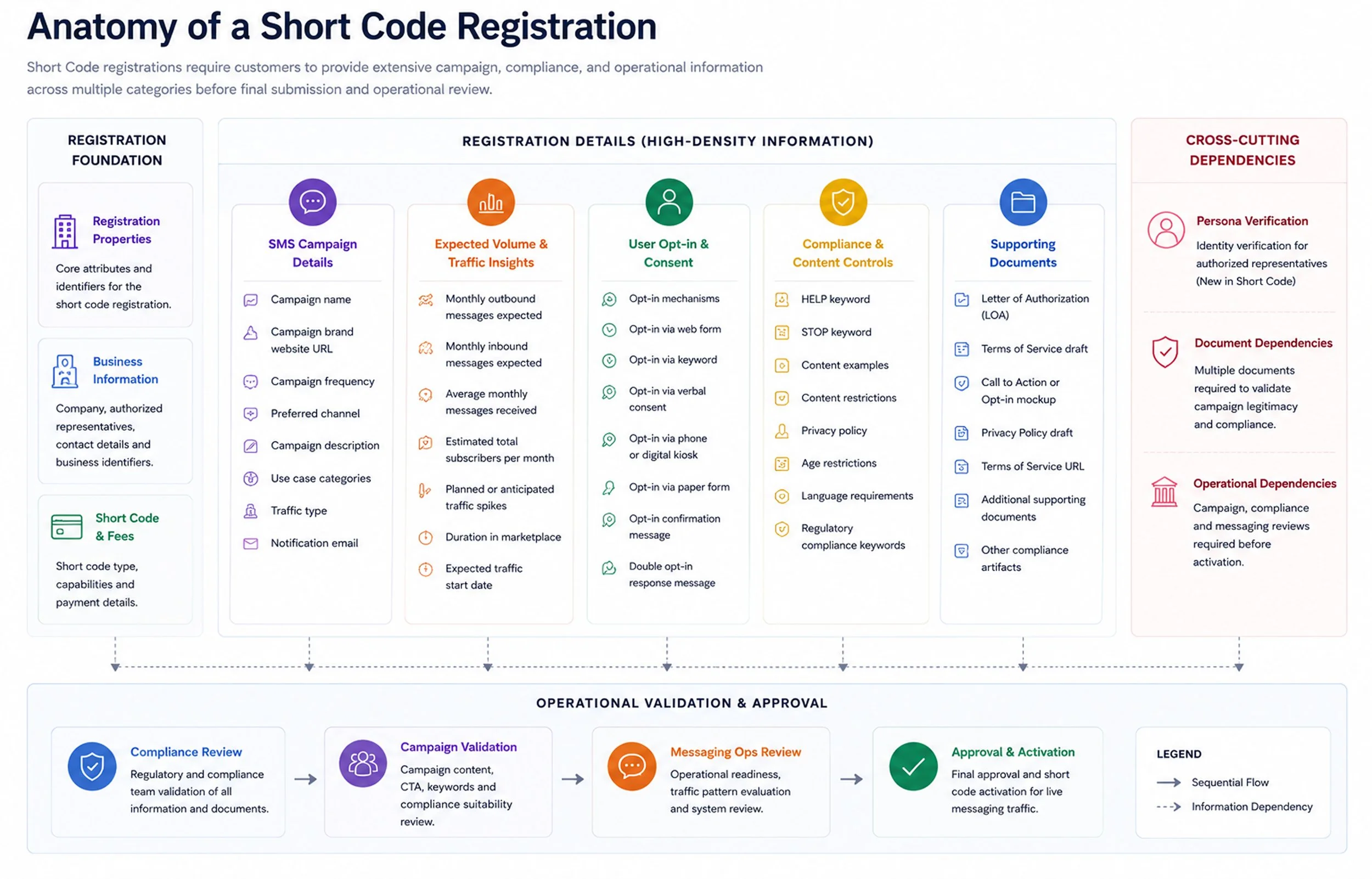
Short Code onboarding introduced a significantly higher level of operational complexity compared to the earlier Voice Trust registration systems.
Unlike CNAM or Branded Calling, Short Code registrations required customers to configure highly detailed messaging compliance information across campaign setup, consent collection, messaging behavior, content validation, supporting documentation, and operational review dependencies.
Additionally, Persona-based verification workflows had never previously existed within the Short Code ecosystem. Integrating Persona into this registration architecture required rethinking how customer verification, authorized representative validation, and compliance ownership mapping could operate within an already complex onboarding journey.
Another major complexity involved supporting two fundamentally different registration pathways:
Direct Customers
- Operate using Primary and Secondary Compliance Profiles
- Maintain full ownership of the registration
- Manage brand, campaign, and compliance verification directly
ISV / Reseller Customers
- Operate through delegated Secondary Compliance Profiles
- Require customer-specific compliance mapping
- Introduce additional ownership and operational dependencies
The registration workflow was also heavily document-driven, requiring users to upload and validate multiple supporting artifacts such as:
- Letter of Authorization (LOA)
- Terms & Conditions drafts
- Call-to-Action mockups
- Privacy policies
- Campaign samples
- Additional compliance documentation
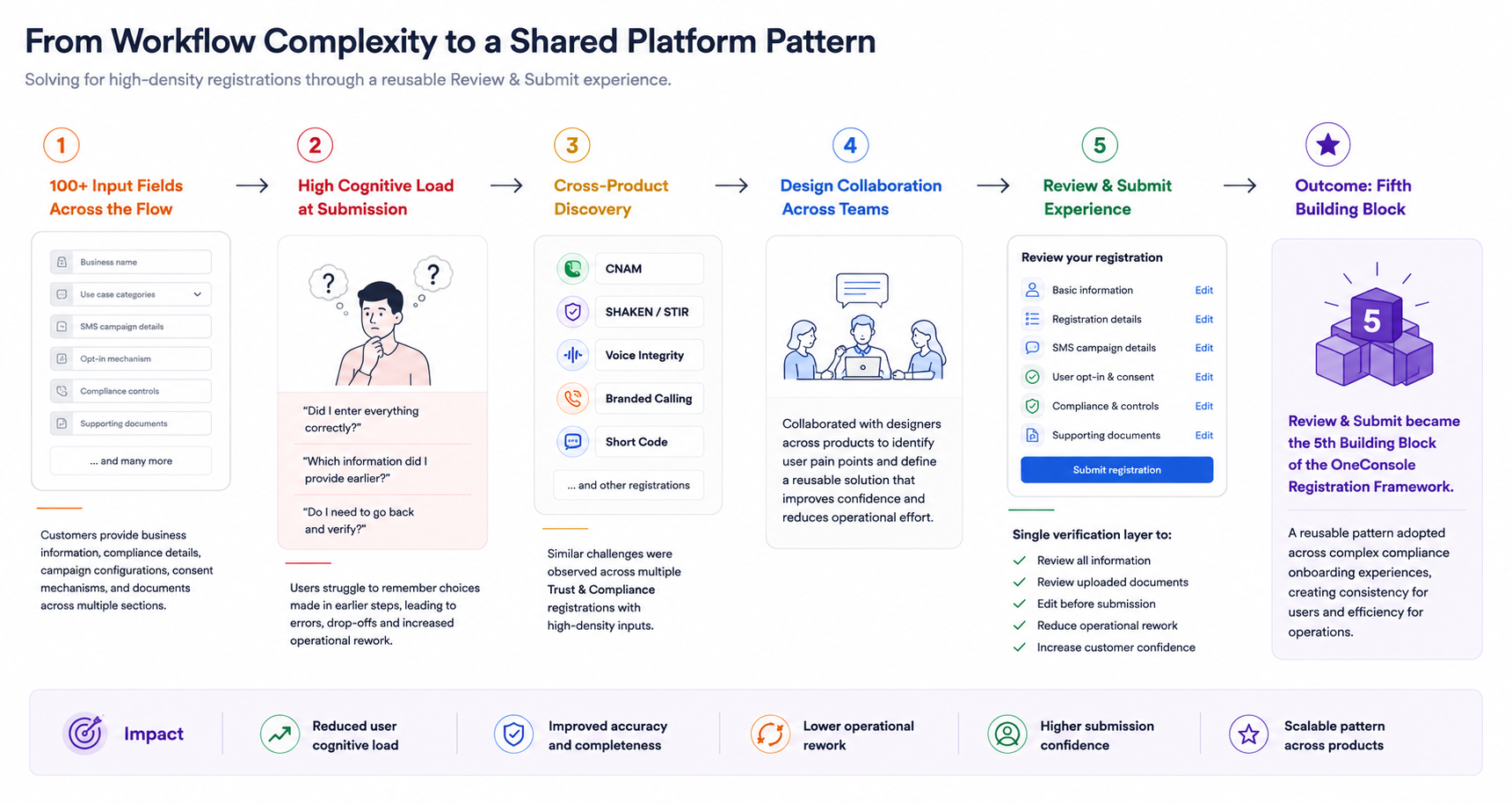
As the onboarding architecture evolved, it became clear that the existing onboarding patterns used across Voice Trust products would not scale effectively for such a dense, operationally heavy registration system.
This exploration became an important step toward understanding how a shared onboarding architecture could support increasingly complex Messaging compliance workflows while remaining consistent with Twilio’s broader OneConsole onboarding direction.
PHASE 1
Building the onboarding foundation for OneConsole Compliance
As Twilio expanded through acquisitions such as SendGrid (2019) and Segment (2020), customers increasingly navigated fragmented onboarding experiences across multiple products, consoles, and compliance workflows.
To support Twilio’s long-term OneConsole vision, this initiative established a shared onboarding architecture capable of scaling across Voice Trust and Messaging compliance products while maintaining a consistent customer experience.
Core Contributions
✓ Created reusable onboarding building blocks
✓ Defined a shared registration architecture
✓ Integrated Persona-based verification workflows
✓ Designed scalable edit, review, rejection and resubmission patterns
✓ Established a framework for future compliance products
✓ Aligned onboarding experiences with OneConsole migration efforts
The resulting framework demonstrated how a single onboarding architecture could support multiple compliance products, operational models, and regulatory requirements. While the framework was applied across all Voice Trust and Messaging registrations, this case study focuses on CNAM and Branded Calling as representative examples of the broader system.
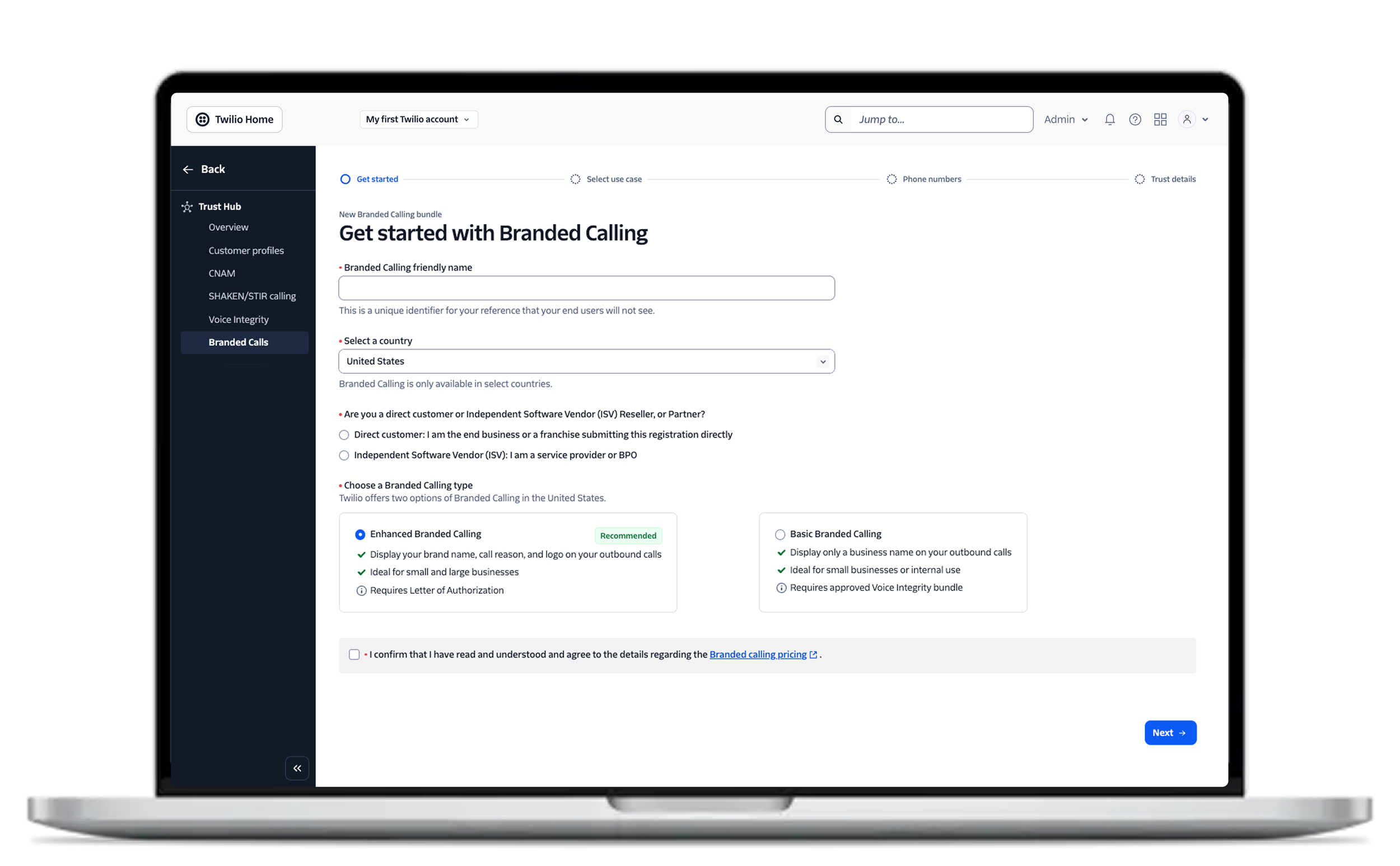
Console Zen, Legacy
Products Supported
✓ CNAM
✓ SHAKEN/STIR
✓ Voice Integrity
✓ Branded Calling
✓ Short Code Registration
Business Impact
✓ Reduced duplication across compliance registration experiences
✓ Accelerated onboarding design for new trust products
✓ Improved consistency across Voice and Messaging registrations
✓ Enabled platform scalability through reusable patterns
✓ Created a foundation for future OneConsole onboarding experiences
OneConsole Zen, Phase 1